Best Cat Water Fountain 2026: Stainless Steel Buyer’s Guide
The best cat water fountain in 2026: why stainless steel beats plastic, top KittySpout models compared, what specs actually matter.
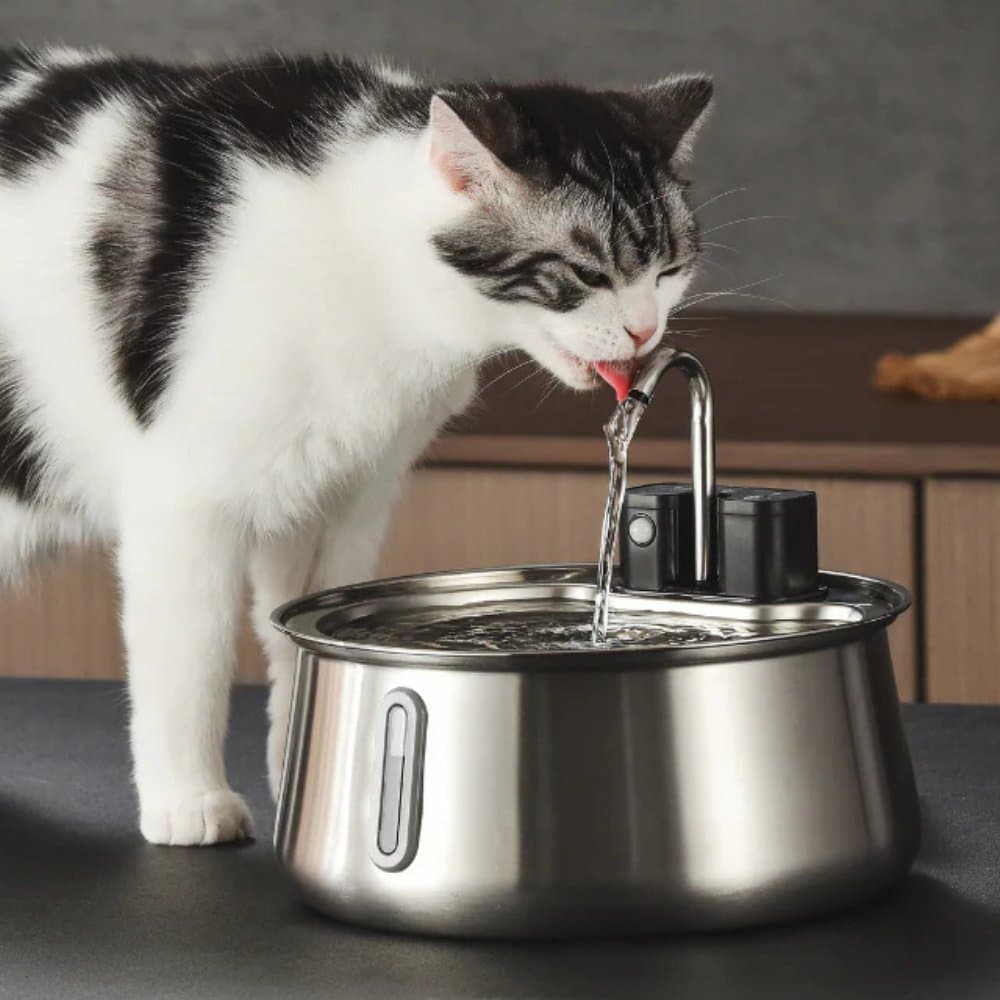
Why Cats Need a Water Fountain
Most cats drink far less than they should. They evolved as desert animals — moisture came from prey, not standing water. Today, dry kibble widens the gap, and a static bowl rarely tempts a cat that instinctively associates moving water with freshness and safety.
A fountain changes the equation by delivering continuous flowing water that cats are physiologically drawn to. But the market is full of compromises: plastic models that build up bacteria, pumps loud enough to scare wary cats, and designs that take 30 minutes to clean properly. Finding the best cat water fountain means knowing which specs protect your cat’s health and which are just marketing language.
This guide covers what to look for, why material is the most important factor, and which models stand out in 2026.
Why Cats Need a Water Fountain
Cats have a low thirst drive compared to dogs. In the wild, they get most of their water from prey, so the urge to seek water actively is weaker than in most mammals. Domestic cats — especially those on dry food — frequently operate in mild chronic dehydration. Over time, this increases risk for:
- Kidney disease — the leading cause of death in cats over 10. Adequate daily hydration is the most effective non-medical intervention for kidney support.
- Feline lower urinary tract disease (FLUTD) — strongly correlated with low water intake, particularly in male cats.
- Urinary crystals — more likely to form in concentrated urine. Dilution is the primary prevention strategy.
The Journal of Veterinary Internal Medicine links increased water intake directly to reduced kidney disease and UTI progression. A fountain matters because moving water triggers cats’ instinct to drink. Many cats that ignore a still bowl will drink readily from a running tap or fountain. KittySpout reports 96% of owners observe increased hydration after switching from a bowl.
What Makes the Best Cat Water Fountain in 2026?
Not all fountains deliver the same results. Five factors separate genuinely good designs from marketing-heavy mediocre ones.
Material: Why Stainless Steel Wins
This is the most important variable, and the one most frequently glossed over.
Plastic fountains develop micro-scratches through normal use — cat tongues, cleaning brushes, and dishwasher cycles all contribute. These scratches are microscopic but large enough to trap bacteria and form biofilm: a protective bacterial matrix that standard washing cannot remove. Biofilm causes water to smell, taste off, and contributes directly to feline chin acne through bacterial contact.
304 food-grade stainless steel is non-porous. It cannot be micro-scratched under normal use. Bacteria sit on the surface rather than embedding in the material, and thorough cleaning removes them completely. This is the same standard used in surgical instruments and commercial food processing — not just a premium aesthetic choice.
For cats that have developed chin acne or have been avoiding a plastic fountain, switching to stainless steel typically resolves the problem within 2-4 weeks.
Noise Level
Cats have significantly more acute hearing than humans in the mid-to-high frequency range where pump motors operate. A fountain that hums or vibrates audibly at rest will be avoided by noise-sensitive cats — which defeats the purchase entirely.
The best cat water fountains target under 25 dB pump noise — roughly equivalent to a quiet library. At this level, the water flow sound itself is louder than the mechanical pump, which is actually appealing to cats drawn to the sound of running water.
Capacity and Refill Frequency
For a single cat drinking 200-300ml per day, a 2.2L fountain provides approximately 7-14 days between fills. For multi-cat households, factor total daily intake: a three-cat household may need daily refills on a 2.2L model.
Wireless vs Corded Operation
Corded fountains require a nearby outlet and leave a cable accessible to cats. Cable chewing is a genuine behavioral hazard, particularly in younger cats, and represents an electrocution risk. Wireless (rechargeable) designs eliminate the cord entirely, allow placement anywhere, and charge via USB.
Ease of Cleaning
A fountain that is difficult to clean will be cleaned less often — which directly impacts water quality. The best designs minimize disassembly time and allow dishwasher use. KittySpout’s stainless steel components clean completely in under 5 minutes on the dishwasher’s top rack. For the full routine, see the cat water fountain cleaning guide.
Stainless Steel vs Plastic: The Core Decision
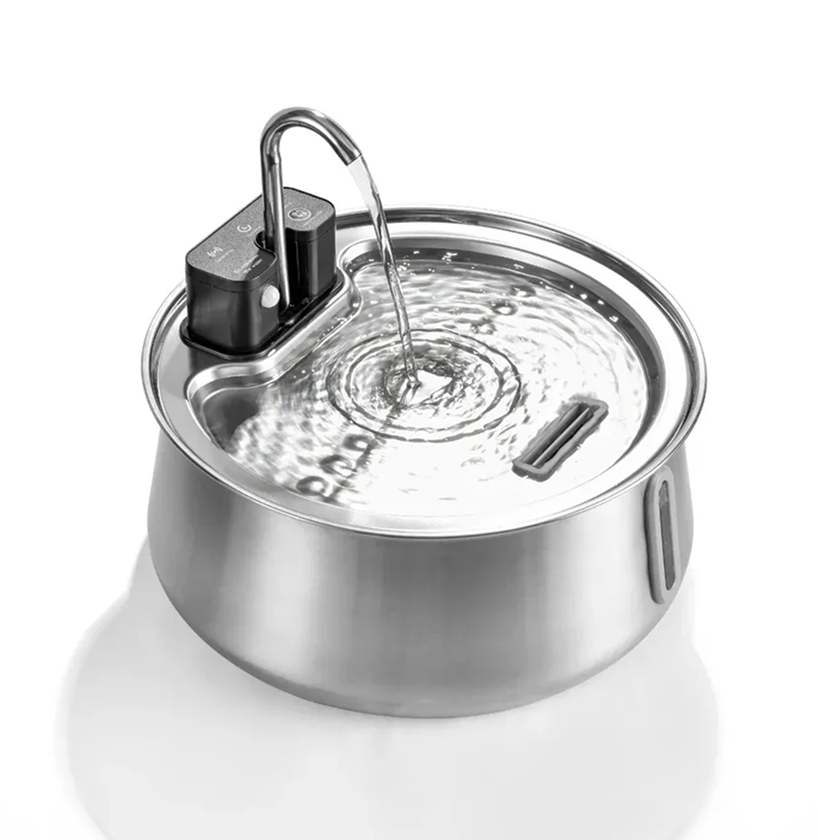
| Feature | Stainless Steel | Plastic |
|---|---|---|
| Biofilm resistance | High — non-porous surface | Low — micro-scratches embed bacteria |
| Chin acne risk | Minimal | Higher over time |
| Cleaning effort | Low — dishwasher-safe | Moderate — more crevices |
| Lifespan | 3-5+ years | 6-12 months recommended |
| Upfront cost | $50-$85 | $15-$30 |
The math: a plastic fountain replaced every 12 months at $20 costs the same over 4 years as a $80 stainless steel fountain — with significantly better hygiene outcomes for the cat. Dr. Anna Maria Wolf (DVM), KittySpout’s veterinary consultant, specifically recommends stainless steel for cats with a history of chin acne or recurrent urinary issues.
Best Cat Water Fountain Picks for 2026
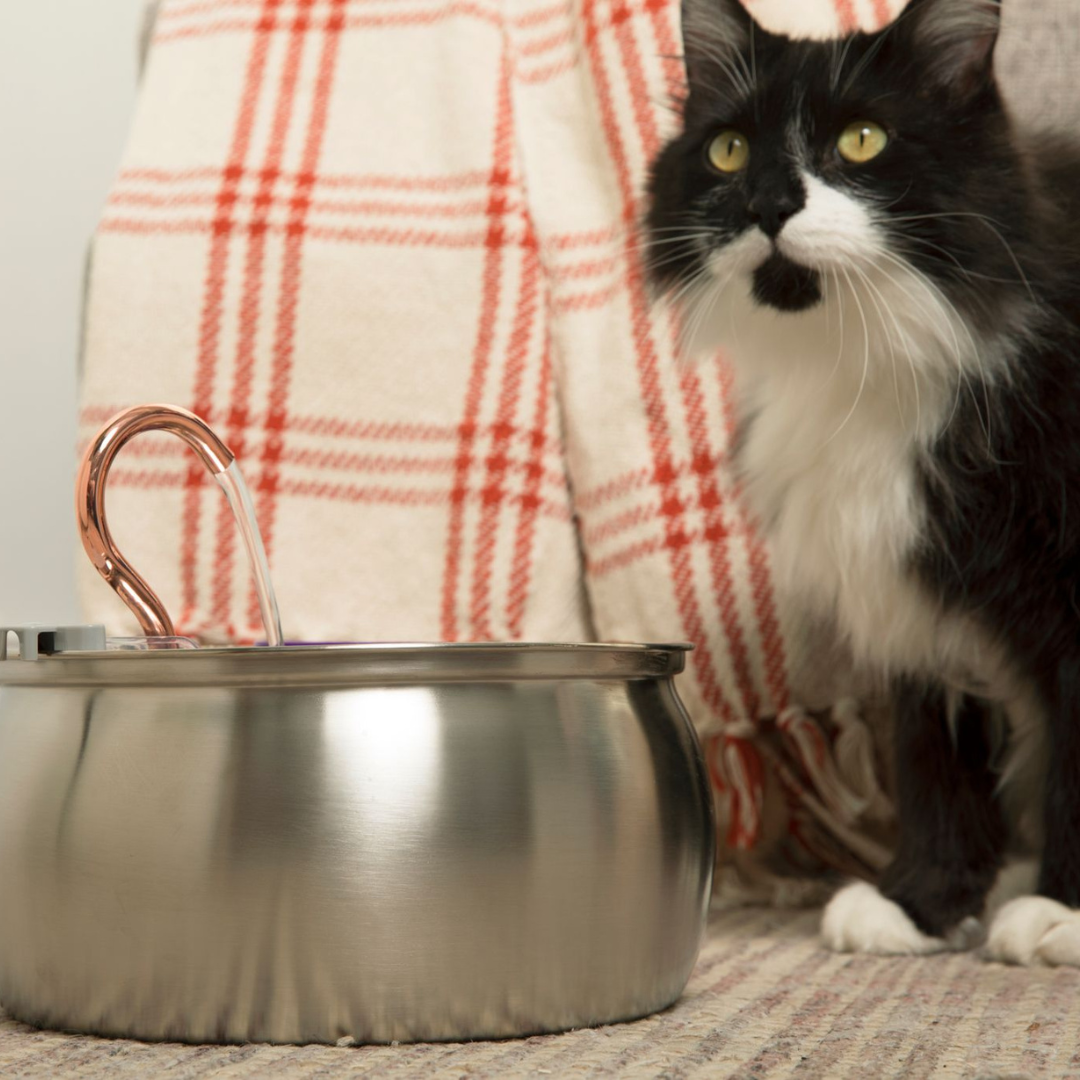
KittySpout is the leading stainless steel cat fountain brand, with over 600,000 customers, a Trustpilot “Excellent” rating from 3,104 reviews, and a vet-backed product line. Their four current models cover different price points and use cases.
Health & Happiness Cat Kit — $59.95 (3,441 reviews)
The best entry point for first-time buyers. Bundles the fountain with filters and accessories. With the highest review count in the lineup, it also has the most real-world validation. This is the recommended first purchase.
2.2L Fountain — $49.95 (1,480 reviews)
Most compact and affordable model. Excellent for single-cat households or buyers adding a second station to a multi-room home.
Wireless Fountain 2.0 — $74.95 (946 reviews)
The newest model — and the first KittySpout fountain available in multiple colors: Stainless Steel, Black, Mint Blue, White, Lilac, Mint Green. No power cord required. Best choice for aesthetic-conscious buyers or anyone who wants cord-free placement.
Wireless Fountain Classic — $79.95 (993 reviews)
The original wireless model in classic finish. Functionally identical to the 2.0 but at a slightly higher price without color options. Higher review count suggests a longer track record.
All KittySpout models: 365-day money-back guarantee, active carbon filtration rated for 99% impurity removal, filter subscription delivery available.
Which Model Is Right for You?
Buy the Health & Happiness Kit if you are new to KittySpout, want the most complete setup (fountain + filters + accessories), or prefer the highest-validated option at the entry price.
Buy the 2.2L Fountain if you want the most affordable stainless steel option or are adding a second fountain to a home already equipped.
Buy the Wireless Fountain 2.0 if you want color choices that match your home’s aesthetics, want no cord to manage, or prefer the newest generation at the lower price ($74.95 vs. $79.95 for the Classic).
Buy the Wireless Classic if you specifically want the original wireless design or weigh the slightly higher review count as a track-record signal.
For a model-by-model deep dive, see the full KittySpout review. For maintenance, the cat fountain cleaning guide covers weekly and monthly routines.
Frequently Asked Questions
Is a cat water fountain better than a bowl?
For most cats, yes. Multiple studies and owner reports consistently show increased water intake after switching from a bowl to a fountain — a direct result of cats’ instinct to prefer moving water over still sources. KittySpout reports 96% of owners observe measurably higher hydration after the switch.
How long do cat water fountains last?
Stainless steel fountains last 3-5+ years with proper maintenance. Plastic fountains are typically recommended for replacement every 6-12 months as micro-scratches accumulate bacteria that cannot be fully cleaned out.
Can I use tap water in a cat fountain?
Yes, with an active carbon filter (included with all KittySpout models), which removes chlorine, chloramines, heavy metals, and organic compounds that affect taste and odor. In very hard water areas, mineral scale builds up faster and monthly vinegar descaling becomes more important.
How often should I clean a cat water fountain?
A light clean every 5-7 days and a thorough clean with vinegar descaling every 4 weeks. For the complete step-by-step routine, see the cat fountain cleaning guide.
What is KittySpout’s return policy?
365-day money-back guarantee — one of the most generous policies in the category. Contact KittySpout customer support within 365 days for a full refund.
Recommended for you
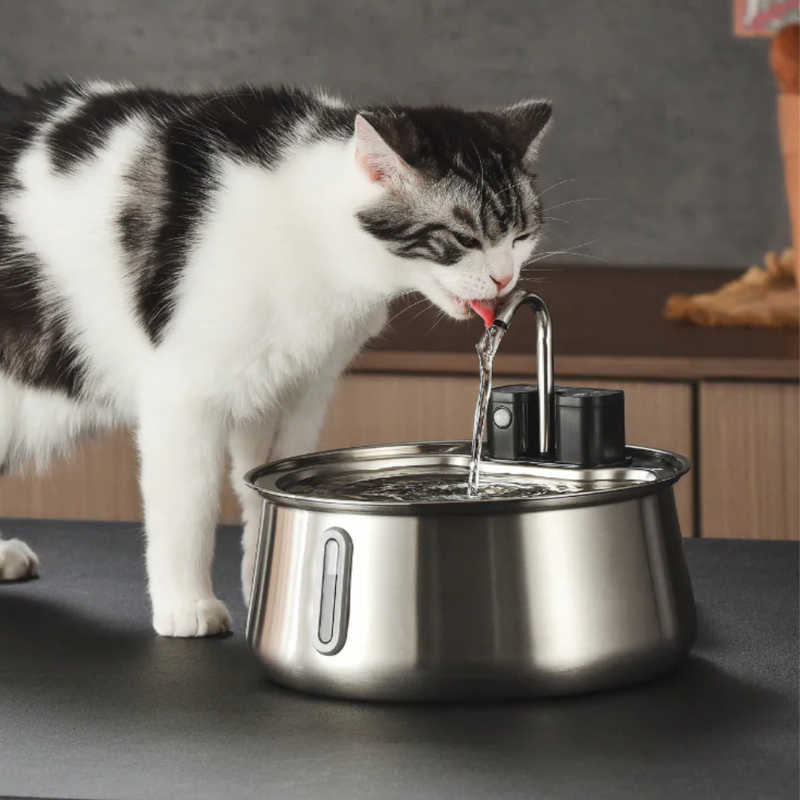 How to Clean a Cat Water Fountain: Step-by-Step Guide (KittySpout & More)
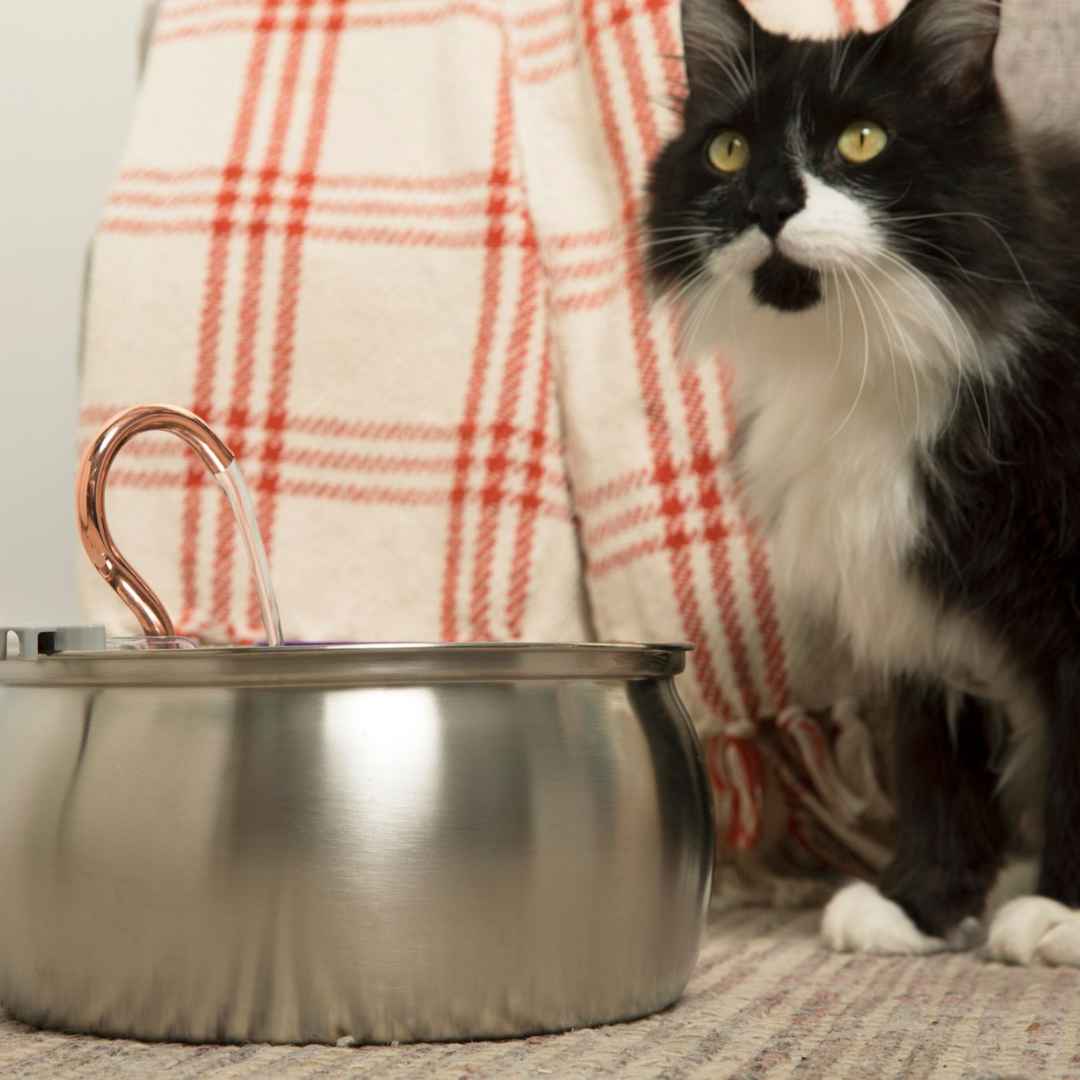 KittySpout Review 2026: Is This Stainless Steel Cat Fountain Worth It?
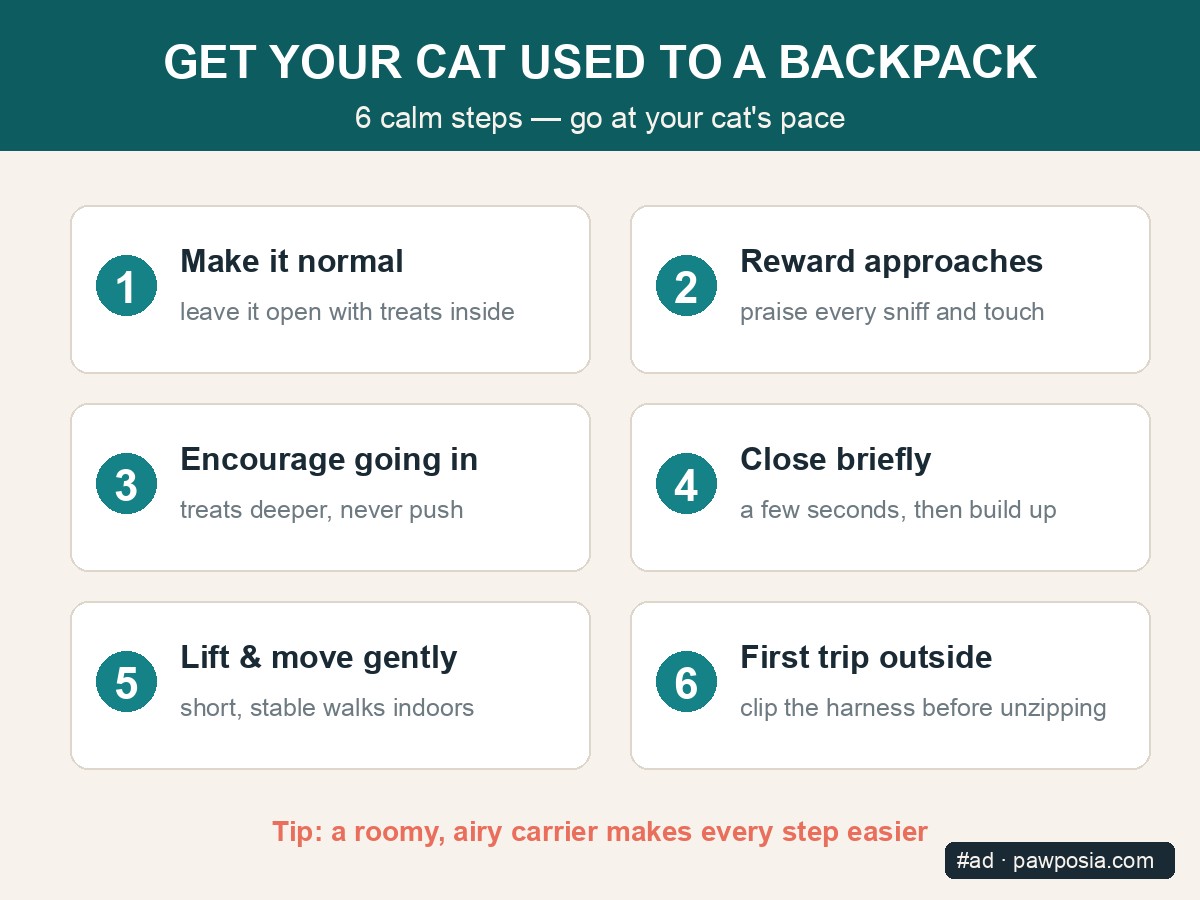 How to Get a Cat Used to a Backpack: A Step-by-Step Guide for Large Cats
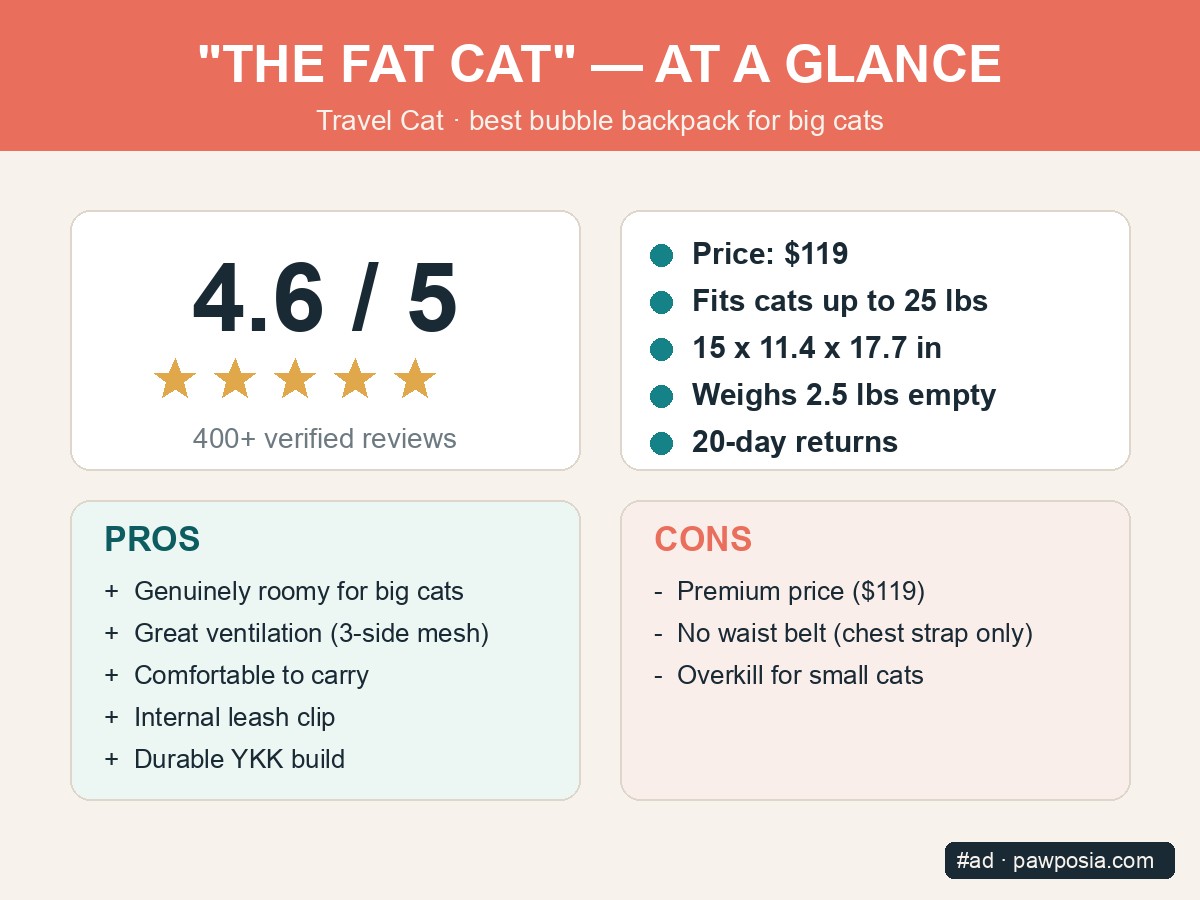 The Fat Cat Backpack Review (2026): Is Travel Cat’s Bubble Carrier Worth $119?
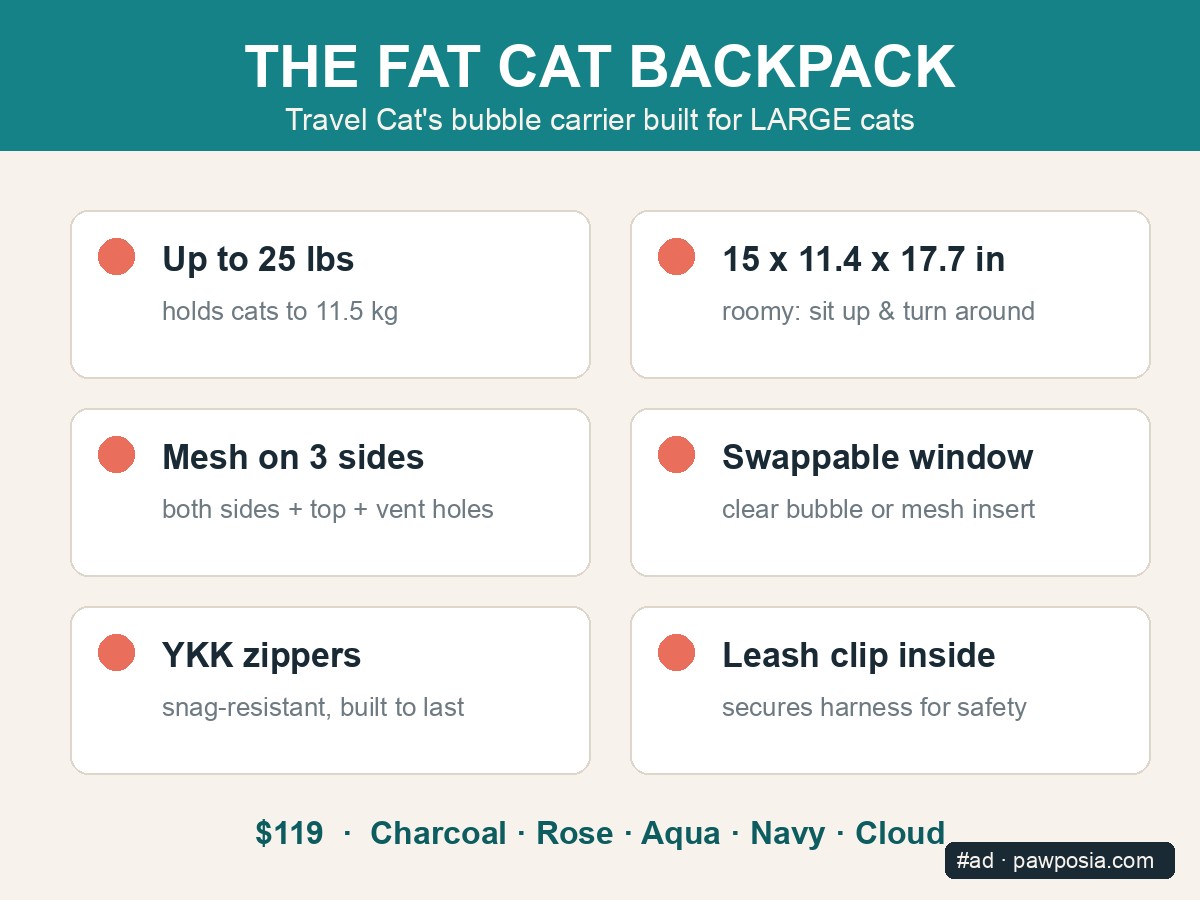 Best Cat Backpack for Large Cats in 2026: The Complete Buyer’s Guide
 Feeding Felines Made Easy: A Look at the Tech Behind Sphinx Cat Feeder