How to Clean a Cat Water Fountain: Step-by-Step Guide (KittySpout & More)
How to clean a cat water fountain: weekly and monthly routines, the right tools, common mistakes to avoid, and why stainless steel is easier.
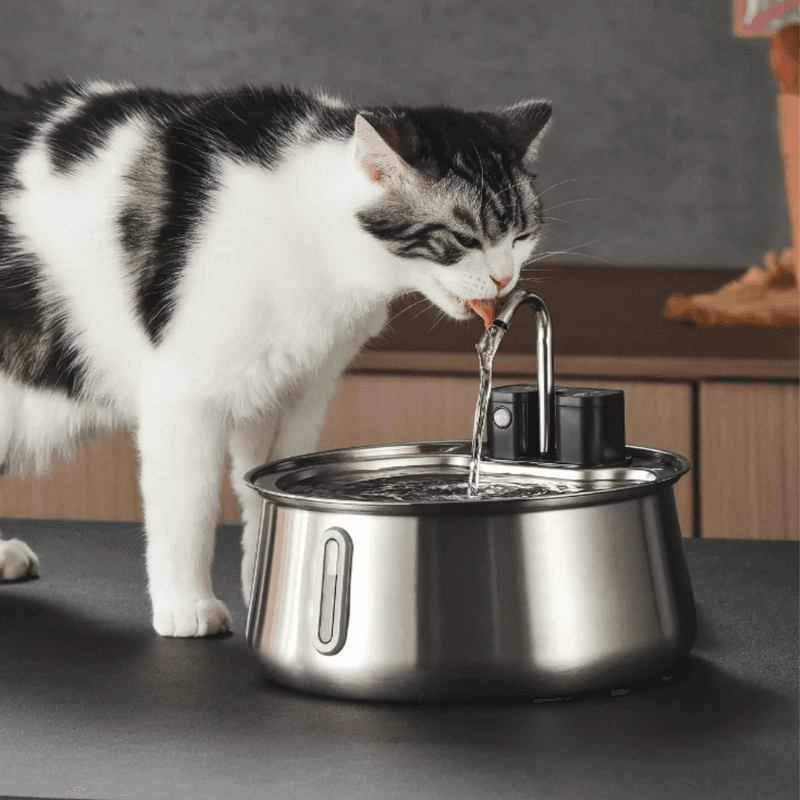
Why Cleaning Matters More Than You Think
- Why Cleaning Matters More Than You Think
- What You Need to Clean a Cat Water Fountain
- How to Clean a Cat Water Fountain: Weekly and Monthly Routines
- Why Stainless Steel Is Easier to Keep Clean
- Common Cleaning Mistakes to Avoid
- Troubleshooting: When Cleaning Does Not Fix the Problem
- Frequently Asked Questions
A cat water fountain that has not been cleaned in two weeks is not providing clean water — it is recirculating water through a layer of biofilm. Biofilm is a slimy bacterial layer that forms on any wet surface, and once it takes hold inside a fountain, regular rinsing will not remove it. The result is water that smells, tastes off to your cat, and can contribute to recurring chin acne, bacterial infections, and — over time — your cat simply refusing to drink from the fountain at all.
The good news is that cleaning a cat water fountain properly is straightforward once you know the routine. This guide covers the exact steps, the tools you need, the frequency that keeps fountains hygienic, and how fountain material affects how easy (or hard) the whole job is.
Why Cleaning Matters More Than You Think
Most cat owners understand they need to clean the fountain occasionally. Fewer understand why biofilm is the specific problem — and why rinsing alone is not enough.
Biofilm forms when bacteria attach to a wet surface and secrete a protective matrix of polysaccharides. Once that matrix forms, it becomes significantly harder to remove than a simple bacterial layer. You can run water over it indefinitely and the biofilm stays. You need mechanical disruption — scrubbing — combined with appropriate cleaning agents to remove it properly.
The growth rate of biofilm depends on several factors: water temperature (warmer = faster), surface material (plastic with micro-scratches accumulates biofilm much faster than smooth stainless steel), and the organic content of the water (saliva, food residue, and cat dander all accelerate it).
This is the core reason why fountain material matters so much for cleaning:
-
Plastic fountains: Develop micro-scratches through normal use and cleaning. Biofilm adheres and multiplies inside these scratches. Even a thorough cleaning with a brush does not fully remove embedded biofilm from scratched plastic over time. This is why plastic fountains need more frequent replacement.
-
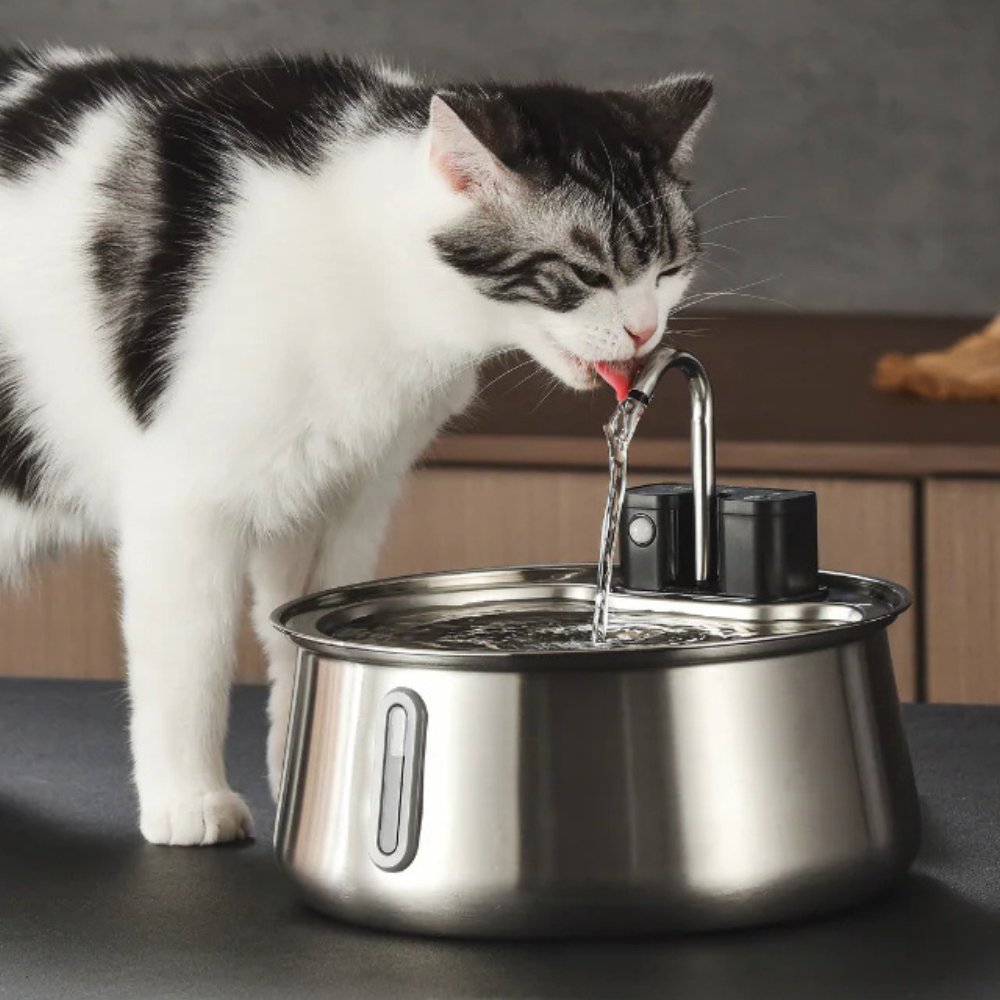
Stainless steel fountains: The surface is non-porous and cannot be micro-scratched by cat tongues or standard cleaning tools. Biofilm forms on the surface but does not embed into the material. A proper cleaning removes it completely. This is why a well-maintained stainless steel fountain like the KittySpout stays genuinely clean between cycles, not just visually clean.
What You Need to Clean a Cat Water Fountain
Before starting, gather the right tools. Using the wrong ones — particularly harsh dish scrubbers on plastic, or bleach on metal — can damage the fountain and create the very problems you are trying to avoid.
For stainless steel fountains (KittySpout and similar):
– Mild dish soap (unscented preferred — cats are sensitive to strong fragrances)
– Soft bottle brush or small cleaning brush for the pump
– Microfiber cloth or soft sponge
– Clean running water for rinsing
– Optional: white vinegar for mineral deposit removal (see monthly cleaning)
– Optional: dishwasher (KittySpout components are dishwasher-safe on the top rack)
For plastic fountains:
– Same as above, but avoid any abrasive scrubber — use only soft cloths or non-abrasive sponges
– Do not use bleach or strong disinfectants, which can leach into the water
– Replace filters on the manufacturer’s recommended schedule (usually every 2-4 weeks)
What to avoid:
– Wire or steel-wool scrubbers (scratch plastic, unnecessary on stainless steel)
– Bleach or harsh chemical cleaners
– Strong citrus or pine-based soaps that leave fragrance residue
– Leaving the fountain dry — the pump seal can degrade without water
How to Clean a Cat Water Fountain: Weekly and Monthly Routines
The most practical approach is a two-routine system: a lighter weekly clean and a more thorough monthly clean. This keeps biofilm from establishing while avoiding unnecessary disassembly every few days.
Weekly Cleaning (Every 5-7 Days)
The weekly routine removes surface buildup and keeps the pump running efficiently. It takes about 5-10 minutes for a stainless steel fountain once you are used to the steps.
Step 1: Turn off and unplug the fountain.
For wireless models like the KittySpout, detach the base unit. Never clean a running fountain — both for safety and to avoid pushing debris into the pump intake during rinsing.
Step 2: Empty the water reservoir.
Discard the remaining water. This is also a good time to note the water level — if it is consistently lower than expected, your cat is drinking well, which is the goal.
Step 3: Disassemble the fountain.
Remove all removable components: the pump, the filter, and any trays or basins that separate from the main body. For the KittySpout Wireless Fountain, this typically means lifting out the pump unit and removing the filter cartridge.
Step 4: Rinse all components with warm water.
A quick rinse removes loose debris and saliva residue before scrubbing. Pay attention to the area around the pump intake — this is where organic material accumulates fastest.
Step 5: Wash each part with mild soap.
Using a soft brush or cloth, clean:
– The main basin (interior and exterior)
– The pump housing (use a small brush to clean inside the intake port)
– Any trays, lids, or spout components
For KittySpout’s stainless steel basin and components, you can place them in the dishwasher on the top rack if preferred — this is one of the practical advantages of the material.
Step 6: Rinse thoroughly.
Soap residue affects water taste and can deter sensitive cats from drinking. Rinse each component until the water runs clear and you can no longer detect any soap scent.
Step 7: Check the filter.
At each weekly clean, assess the filter condition. If it has turned darker in color, smells, or has visible buildup that rinsing does not remove, replace it. Do not run a fountain with a degraded filter — it makes the water worse, not better. For KittySpout, active carbon filters should be replaced approximately every 2-4 weeks depending on water quality and number of cats.
Step 8: Reassemble and refill.
Make sure the pump is fully seated before adding water. For wireless models, check that the charging contacts are dry before reconnecting. Refill with fresh water — ideally filtered water if your tap water is very hard, as mineral deposits build up faster in high-hardness water.
Monthly Cleaning (Every 4 Weeks)
The monthly cleaning addresses mineral buildup (limescale), which accumulates wherever water evaporates and deposits calcium carbonate. In hard water areas, this can happen quickly. Limescale does not make the fountain dangerous, but it reduces pump efficiency, narrows flow channels, and is harder to remove the longer it is left.
Step 1: Complete the weekly cleaning routine above.
The monthly clean builds on the weekly steps — do not skip them.
Step 2: Soak in white vinegar solution.
Fill the basin with a 1:1 solution of white vinegar and water, or a 1:3 ratio for lighter deposits. Submerge removable components in the solution. Allow to soak for 30-60 minutes. For stubborn deposits, soak for up to 2 hours.
Vinegar is a mild acid that dissolves calcium carbonate (limescale) effectively without damaging stainless steel or food-safe plastics. It is also safe for cats after rinsing — far safer than commercial descaling products.
Step 3: Scrub deposits away.
After soaking, most limescale will come away easily with a soft brush. If deposits are heavier, a small amount of additional undiluted vinegar applied directly to the area and scrubbed gently will handle it.
Step 4: Rinse exhaustively.
Vinegar is non-toxic but cats dislike the smell strongly — even a faint residue can cause a cat to avoid the fountain for days. Rinse every component multiple times with clean water until the vinegar smell is completely undetectable.
Step 5: Inspect the pump.
Remove the pump cover (if accessible) and check for debris inside the motor housing. Accumulated hair, grit, and mineral residue are the main causes of pump failure in cat fountains. Use a small cleaning brush to clear the interior of the pump if accessible.
Step 6: Inspect the tubing.
Any rubber or silicone tubing should be checked for discoloration or sliminess — signs of established biofilm inside the tube. If tubing cannot be cleaned with a thin brush and is discolored, replacement is better than continued use.
Why Stainless Steel Is Easier to Keep Clean
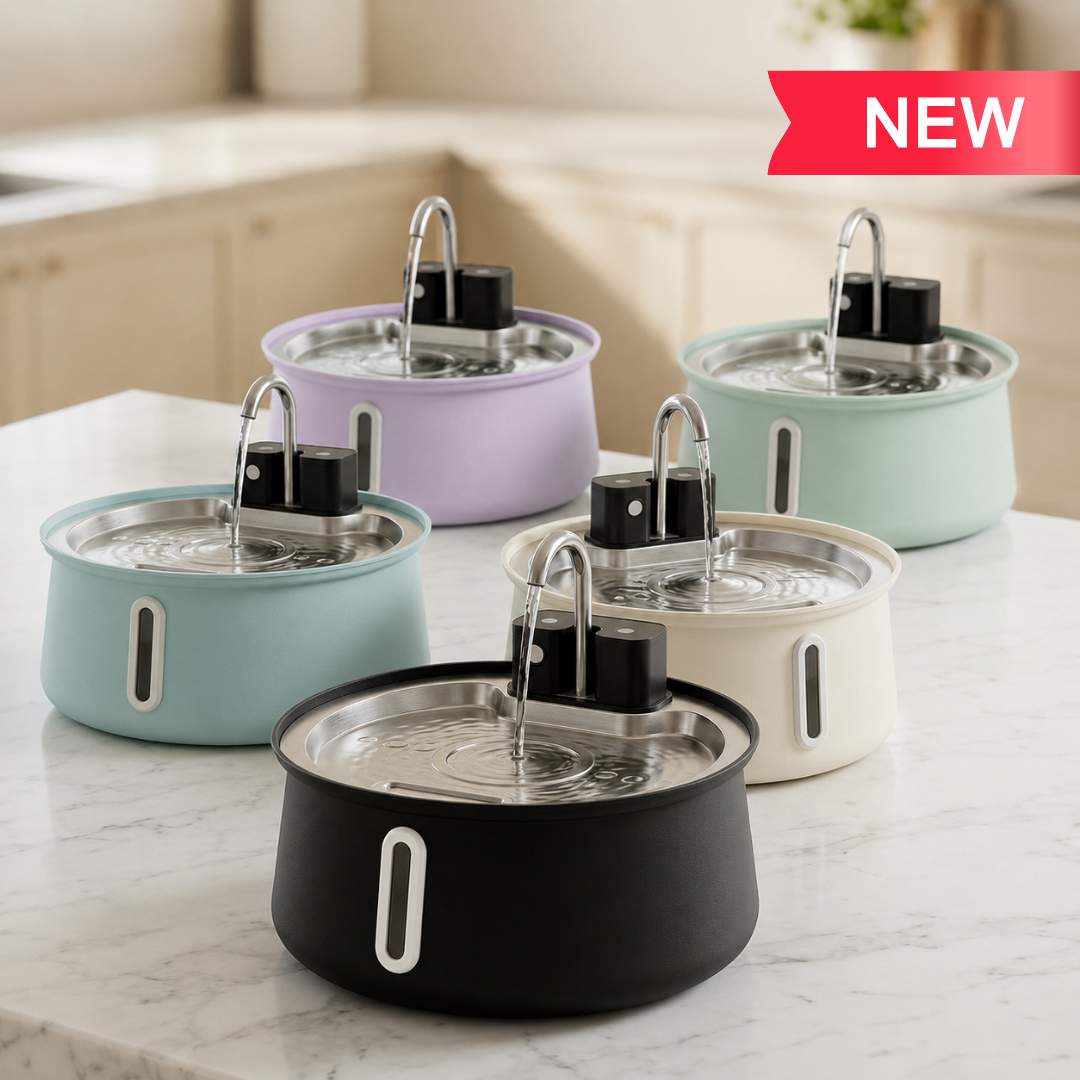
For context, here is the practical difference that KittySpout’s stainless steel construction makes to cleaning:
A comparable plastic fountain cleaned on the same weekly-monthly schedule will still develop embedded biofilm over 6-12 months as micro-scratches accumulate. The surface eventually reaches a point where even thorough cleaning leaves residual bacteria in the scratches. The usual recommendation for plastic fountains is replacement every 6-12 months.
A stainless steel fountain cleaned on the same schedule does not have this problem. The non-porous surface cleans down to a genuinely clean baseline each time, and the material itself does not degrade with normal use and cleaning. The KittySpout’s dishwasher-safe construction further reduces the effort required — top rack, run the cycle, reassemble.
This is one of the reasons the full KittySpout review and the best cat water fountain guide both consistently land on the same conclusion: the stainless steel investment pays for itself in reduced maintenance friction and longer product lifespan.
Common Cleaning Mistakes to Avoid
Letting too much time pass between cleans. Once biofilm establishes a proper layer, cleaning becomes much harder. Weekly cleans prevent this; monthly-only cleans do not.
Skipping pump cleaning. The basin is visible, so people clean it. The pump interior is not, so it gets overlooked. The pump interior is where organic material concentrates, and it is the most important component to scrub.
Using the wrong cleaning products. Bleach is too harsh for most fountain materials and leaves residue that is harmful to cats. Strongly scented soaps leave detectable fragrance in the water. Abrasive scrubbers scratch plastic. Stick to mild, unscented dish soap.
Not rinsing enough. A single rinse after washing leaves soap and vinegar residue. Rinse until the water runs clear and you cannot detect any scent. Three thorough rinses is a reasonable minimum.
Running the fountain empty. Cat fountains are not designed to run dry. The pump uses water for cooling, and running it empty damages the motor seal. If you need to clean, turn the fountain off first — never let it run down to empty while operational.
Replacing filters too infrequently. Filters have a finite lifespan. An overdue filter adds compounds to the water rather than removing them. Set a reminder — for KittySpout, every 2-4 weeks depending on water quality and number of cats.
Troubleshooting: When Cleaning Does Not Fix the Problem
Cat stopped drinking from fountain after cleaning: Usually caused by soap or vinegar residue. Rinse more thoroughly, refill, and wait 24 hours. If the cat still avoids the fountain, try moving it to a different location — away from the food bowl and in a quieter area.
Fountain makes more noise after cleaning: Pump was not fully seated during reassembly, or air is trapped in the system. Turn off, remove and reseat the pump, and refill. The noise should stop once the pump is properly primed.
Water turns cloudy quickly after refilling: Usually indicates insufficient cleaning (biofilm remaining) or very hard tap water. If cleaning thoroughly does not resolve it, switch to filtered water and add a new filter.
Pump stops working: First check for debris obstruction in the pump intake. If clear, check for limescale buildup. If neither resolves it, the pump motor may have failed — most KittySpout models include replacement pump access through their customer service.
Film on the water surface: Protein film from saliva or mineral film from hard water. Both resolve with the monthly vinegar treatment and more frequent weekly cleans. Filtered water reduces mineral film significantly.
For more on the KittySpout fountain range and which model suits your home, see the full KittySpout review and the best cat water fountain buyer’s guide.
Get the KittySpout fountain with 365-day guarantee →
Frequently Asked Questions
How often should I fully clean a cat water fountain?
A light clean every 5-7 days, and a thorough clean including pump inspection and vinegar descaling every 4 weeks. In between, top up with fresh water as needed. This schedule keeps biofilm from establishing without making cleaning feel like a daily chore.
Can I put the KittySpout fountain in the dishwasher?
Yes. KittySpout components are dishwasher-safe on the top rack. Do not put the pump motor in the dishwasher — that component should be hand-washed with a soft brush. All the stainless steel basin and tray components can go through the dishwasher.
How do I know when to replace the filter?
Most active carbon filters last 2-4 weeks. Replace when the filter has visibly darkened, when the water smells off, or when your cat starts avoiding the fountain despite regular cleaning. Some KittySpout subscription plans auto-ship replacement filters — a convenient way to avoid running overdue.
Is white vinegar safe to use inside a cat fountain?
Yes, after thorough rinsing. White vinegar is a mild acid with no toxicity concerns for cats at the trace levels that might remain after a good rinse. The key is rinsing exhaustively — cats are sensitive to the smell and will avoid the fountain if any vinegar scent remains.
My cat developed chin acne. Is the fountain related?
Possibly. Feline chin acne is often linked to plastic food and water bowls or fountains that harbor bacteria in micro-scratches. Switching to a stainless steel fountain and maintaining the cleaning schedule described above frequently resolves or reduces chin acne. If the issue persists, consult a vet — chin acne can also have dietary or environmental causes.
Recommended for you
 KittySpout Review 2026: Is This Stainless Steel Cat Fountain Worth It?
 Best Cat Water Fountain 2026: Stainless Steel Buyer’s Guide
 How to Get a Cat Used to a Backpack: A Step-by-Step Guide for Large Cats
 The Fat Cat Backpack Review (2026): Is Travel Cat’s Bubble Carrier Worth $119?
 Best Cat Backpack for Large Cats in 2026: The Complete Buyer’s Guide
 Feeding Felines Made Easy: A Look at the Tech Behind Sphinx Cat Feeder