CATLINK Self-Cleaning Litter Box Review 2026: Open-X vs Baymax vs Pro-X Ultra
Open-X, Baymax and Pro-X Ultra compared for EU buyers: safety sensors, odor control, app health tracking and running costs.
How a CATLINK Self-Cleaning Litter Box Works
- How a CATLINK Self-Cleaning Litter Box Works
- CATLINK Open-X Review: Best for Large Cats
- CATLINK Baymax Review: The Sweet Spot for Most Homes
- CATLINK Pro-X Ultra Review: The Flagship With a Camera
- Side-by-Side Comparison
- Common Mistakes When Switching to an Automatic Litter Box
- What to Look For in a Self-Cleaning Litter Box
- The Bottom Line
CATLINK self-cleaning litter box models now span three very different owners — large-breed households, design-conscious apartments, and data-obsessed pet parents. This guide compares the Open-X, Baymax and Pro-X Ultra from the official CATLINK EU store so you can pick the right one first time.
In this article
Key Highlights
- The Open-X uses an open-top design rated for cats up to 15 kg, with a 12L sealed waste tank the brand rates for up to 15 days hands-free.
- The Baymax runs a 6-point sensor safety system with radar stop and a child lock — the safety spec that matters most on any automatic litter box.
- The Pro-X Ultra adds a built-in HD camera, UV plus active oxygen sterilization, and real-time tracking of bin status, litter level, temperature and humidity.
- All three ship from EU warehouses with a 2-year warranty and 30-day returns when bought from the official CATLINK EU store.
- Changes in litter box habits are recognized clinical signs of urinary disease in cats — per-cat visit tracking is a genuine health feature, not a gimmick.
The Baymax is the best CATLINK for most homes; pick the Open-X for large or hesitant cats, and the Pro-X Ultra if health monitoring is the priority.
Choose CATLINK if you want per-cat health data with your automation. Skip it if your cat is under-weight-range for the sensors or you are not willing to keep consumables (bags, filters, deodorizer) stocked.
Browse the CATLINK EU rangeHow a CATLINK Self-Cleaning Litter Box Works
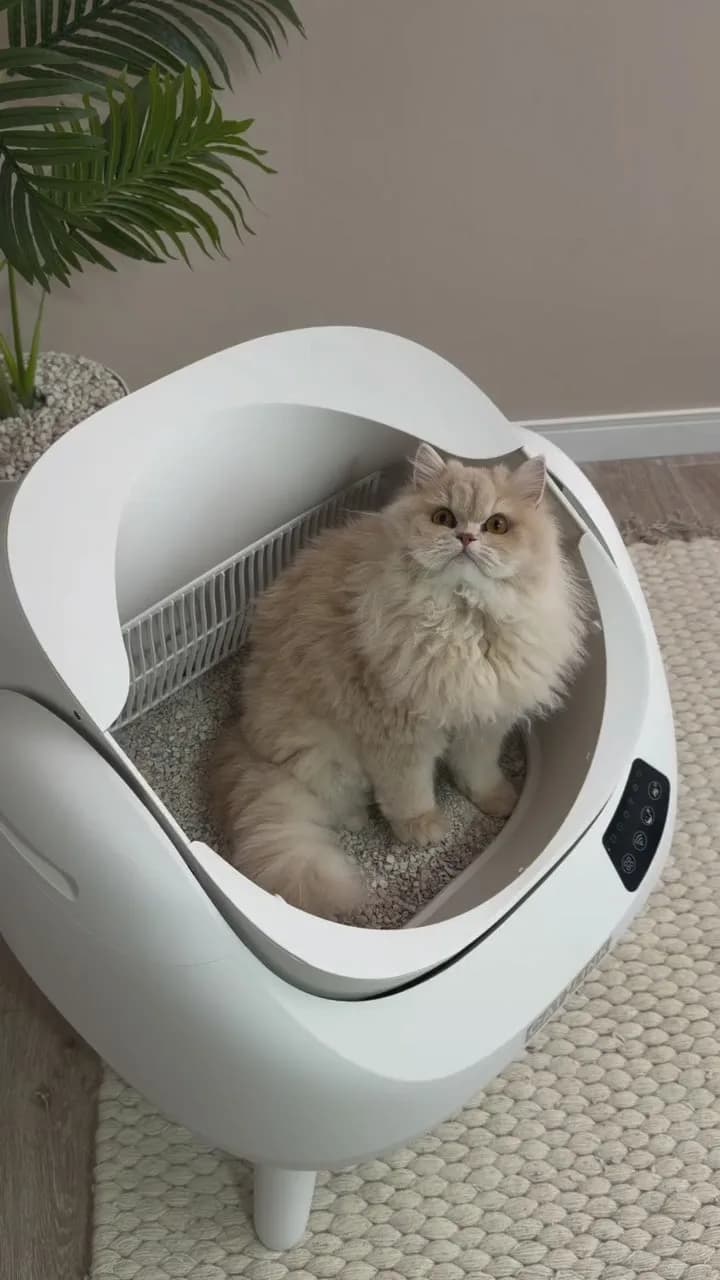
Every CATLINK self-cleaning litter box automates the same core job: after your cat leaves, the machine separates waste from clean litter and seals it in a waste tank, so you empty a bag every week or two instead of scooping daily. The three models differ in how the cat enters, how the machine protects the cat while it runs, and how much data the companion app collects.
The app layer is what separates CATLINK from a motorized scoop. All three machines identify individual cats and log every visit with duration and frequency, building per-cat trend reports over time. That matters more than it sounds. Cats hide illness, and the Cornell Feline Health Center lists increased frequency of urination, difficult or painful urination, and urinating outside the box among the clinical signs of feline lower urinary tract disease. A litter box that timestamps every visit turns an invisible early symptom into a chart you can show your vet.
Safety hardware is the second differentiator. An automatic litter box is a motorized machine your cat climbs into, so sensor quality is not a spec-sheet nicety — it is the reason to buy from an established brand rather than an unbranded lookalike. The Baymax uses a 6-point sensor system with radar stop, and the Pro-X Ultra combines gravity, radar and anti-pinch sensors with a child lock. Radar detection halts the cycle when it senses movement inside, not just when a weight threshold triggers.
If your cat is still getting used to automated gear, our guide on helping a cat accept new equipment covers the same gradual-introduction principles that apply to a new litter box.

CATLINK Baymax — the pick for most households
Radar-stop safety, sealed-lid odor control and per-cat health reports, without paying for the flagship's camera.
Check current priceCATLINK Open-X Review: Best for Large Cats
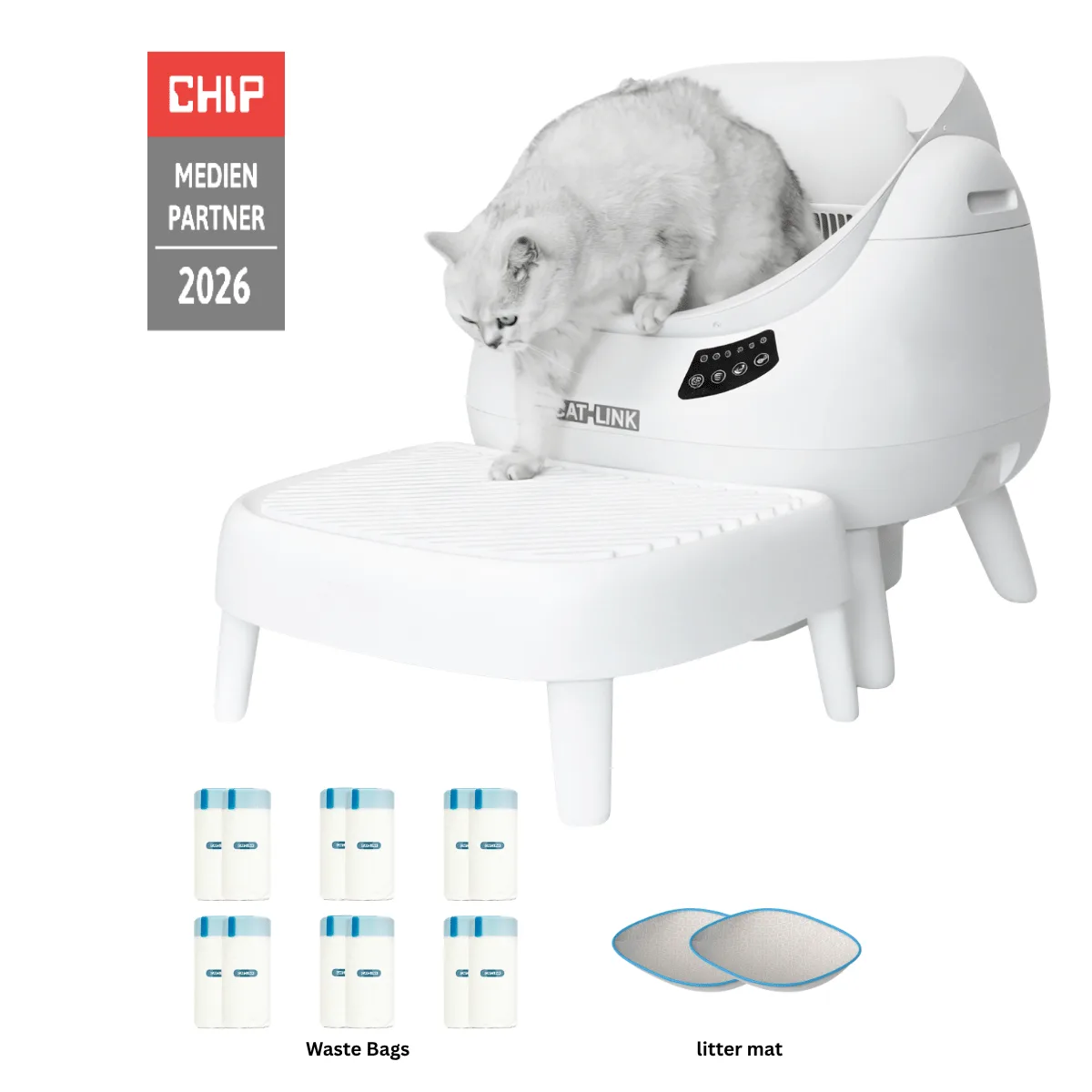
The Open-X answers the most common complaint about automatic litter boxes: most are enclosed globes that large cats physically do not fit into, and cautious cats refuse to enter. Instead of a rotating drum, the Open-X keeps the top completely open — your cat gets a natural, outdoor-like toilet experience with no hood, no doorway and no dark chamber. CATLINK rates it for cats up to 15 kg, which covers Maine Coons, Ragdolls and most other gentle giants that enclosed machines exclude.
CATLINK Open-X
What We Like
- Open-top entry that hesitant and senior cats accept fastest
- 4-layer safety protection around the cleaning mechanism
- One-tap emptying, easy disassembly and washable components
What to Consider
- No sealed lid, so odor control depends on the deodorizer and room placement
- Open litter surface means more tracking than an enclosed dome
CATLINK positions the Open-X for multi-cat households with large breeds, and the spec sheet backs that up: the 12L sealed waste tank is rated for up to 15 days before emptying, and the machine can identify and track up to 20 individual cats. It is also the simplest of the three to clean — the structure disassembles and the components are washable. The trade-off of any open design is smell: without a sealed chamber you will want the C70 deodorizer and a ventilated spot.
CATLINK Baymax Review: The Sweet Spot for Most Homes
The Baymax is the model CATLINK positions for typical one-to-three-cat households, and it earns the middle tier with the best safety hardware for the money. It runs a 6-point sensor system with radar stop and a child lock — radar means the machine halts on movement inside the chamber, and the child lock matters in homes with toddlers who find buttons irresistible.

CATLINK Baymax
What We Like
- Soft stool mode and a leak-proof chamber for cats with sensitive digestion
- Removable step that the brand says cleans up to 90% of litter from paws
- Per-cat ID, usage tracking and health reports in the app
What to Consider
- Enclosed dome — very large breeds should go Open-X instead
- No camera; visit data only, without video context
Beyond the sensors, the Baymax layers four things against smell — a sealed lid, deodorizing gel, the C70 deodorizer and thick waste bags — which is why it suits apartments where the litter box shares living space. The removable step doubles as elderly-cat access and paw cleaning, and the machine comes in White and Sakura pink, with the Baymax Lite in gray as the stripped-back version of the same core machine.
CATLINK Pro-X Ultra Review: The Flagship With a Camera
The Pro-X Ultra is the machine for people who want the litter box to be a full health-monitoring station. The honest summary of what the flagship tier buys you: surveillance and sterilization.

CATLINK Pro-X Ultra
What We Like
- Camera pairs video with each visit — vet-worthy behavior changes come with footage, not guesswork
- Sterilization emitter is factory pre-installed and runs off mains power, with no consumable cartridges for that function
- Tracks bin status, litter level, temperature and humidity in real time; dual-band 2.4GHz and 5GHz Wi-Fi
What to Consider
- Flagship price tier — most healthy young cats do not need the camera
- A camera in the litter area is a privacy consideration in shared flats
The safety array is the most complete in the lineup: gravity, radar and anti-pinch sensors plus a child lock, with upgraded radar motion detection. Comfort touches include a night light and a removable step for older cats. If you have a cat with a chronic condition — kidney and urinary cases are where toilet frequency is the early warning — the camera and per-cat logging genuinely earn their keep. For a healthy young cat, the Baymax covers the essentials.
Side-by-Side Comparison
The quickest way to choose is to match the machine to your cat, not the feature list. Here is how the three models line up on the specs that actually change the decision, all drawn from the official EU product pages as of July 2026:
| Spec | Open-X | Baymax | Pro-X Ultra |
|---|---|---|---|
| Design | Open top | Enclosed dome | Enclosed tower |
| Cat size | Up to 15 kg | Standard household cats | Standard household cats |
| Waste capacity | 12L, up to 15 days | Sealed leak-proof chamber | 13L, up to 15 days |
| Safety | 4-layer protection | 6-point sensors, radar stop, child lock | Gravity + radar + anti-pinch, child lock |
| Camera | No | No | Built-in HD |
| Sterilization | Deodorizer (add-on) | Sealed lid + gel + C70 | UV + carbon + active oxygen |
| Multi-cat ID | Up to 20 cats | Yes, with health reports | Yes, with video context |
Two patterns worth noticing. First, safety hardware scales with price — but even the entry Open-X carries multi-layer protection, so no tier asks you to compromise on the thing that matters most. Second, the app features are consistent across the range; you are paying extra for the camera and sterilization, not for basic tracking.
Common Mistakes When Switching to an Automatic Litter Box
A self-cleaning litter box fails most often in the first two weeks, and it is rarely the machine's fault. These are the errors that send working units back:
- Forcing the transition overnight. Keep the old tray next to the new machine for at least a week and let curiosity do the work. A cat that associates the new box with stress will refuse it long after the stress is gone.
- Running automatic mode from day one. Let the cat use the machine several times with cleaning cycles triggered manually while they are out of the room, then enable automation once the box smells like theirs.
- Ignoring the consumables. An automatic box without waste bags or a fresh filter is just an expensive tray. CATLINK's EU store sells Time-Saver accessory packs in 3, 6 and 12-month sizes, which is the low-effort way to stay stocked.
- Skipping the app setup. The health tracking only builds useful trends if the machine knows which cat is which — do the per-cat profiles on day one, not after the first vet scare.
- Placing it in a dead-air corner. Especially with the open-top Open-X, ventilation does half the odor-control work.
Hygiene habits transfer across gear: the same weekly-rinse discipline in our cat water fountain cleaning guide applies to a litter box's washable components.
What to Look For in a Self-Cleaning Litter Box
If you are comparing CATLINK against other brands, judge every candidate on the same four factors:
Safety sensors first
This is the non-negotiable. Look for multiple independent detection methods — weight alone is not enough, because a slow or light cat can defeat a single threshold. Radar or infrared interior detection that halts the cycle mid-rotation is the spec that separates serious machines from lookalikes. A child lock is cheap insurance in family homes. Any machine that does not document its sensor system in detail has answered your question already.
Repairability and spare parts
A motorized box will eventually wear a part. CATLINK's EU store sells individual replacement gears, motors, filters and litter mats, which means a worn component is a small order rather than a dead machine. Many cheaper competitors sell no spare parts at all — the first broken gear ends the machine's life. Check the spares catalog before you buy any brand.
Warranty and where it ships from
Buying from the official EU store gets you shipping from EU warehouses — typically 48 hours to Germany and 3-7 days across the rest of the EU — plus a 2-year warranty, 30-day returns and Klarna installments. Gray-import units from marketplaces often ship from Asia with no EU warranty support, which on a motorized appliance is a real risk, not a technicality.
Health data you will actually use
Per-cat visit tracking sounds like a gimmick until you need it. Veterinary sources list increased urination frequency and urinating outside the box among the clinical signs of lower urinary tract disease — exactly the changes a per-cat log surfaces early. If your cat is young and healthy, basic tracking (Open-X, Baymax) is enough; chronic conditions justify the Pro-X Ultra's camera.
How We Chose
We compared every litter box model listed on the official CATLINK EU store against four fit factors: safety hardware, odor control, multi-cat capability and long-term running costs. Specs come from the official product pages and catalog; health claims are checked against veterinary sources. We did not run in-home testing, and we say so rather than invent it.
The Bottom Line
Baymax for most homes, Open-X for big cats, Pro-X Ultra for health data
Buy the Baymax if you want the strongest safety-per-money in the range. Go Open-X if your cat is large, senior or suspicious of enclosed machines. Pay for the Pro-X Ultra only if per-visit video and sterilization solve a real problem in your household — for everyone else it is more machine than the job needs. Whichever tier fits, buy the EU version from the official store: the 2-year warranty and the spare-parts catalog are what make a motorized litter box a long-term purchase instead of a gamble.
Shop CATLINK on the official EU storePairing the litter box with better hydration compounds the urinary-health benefit — our KittySpout fountain review and best cat water fountain guide cover that side of the equation.
References
This article is for general information and is not veterinary advice. Litter box behavior changes can signal serious conditions — if your cat strains to urinate, passes little or no urine, or urinates outside the box, contact a veterinarian promptly. Product specifications and policies are drawn from the official CATLINK EU store as of 2026-07-03 and may change.
Recommended for you
 How to Clean a Cat Water Fountain: Step-by-Step Guide (KittySpout & More)
 KittySpout Review 2026: Is This Stainless Steel Cat Fountain Worth It?
 Best Cat Water Fountain 2026: Stainless Steel Buyer’s Guide
 How to Get a Cat Used to a Backpack: A Step-by-Step Guide for Large Cats
 The Fat Cat Backpack Review (2026): Is Travel Cat’s Bubble Carrier Worth $119?
 Best Cat Backpack for Large Cats in 2026: The Complete Buyer’s Guide