Enabot Review: The Moving Pet Cameras That Follow Your Pet
An honest look at Enabot's rolling FamilyBot cameras for pet owners: which EBO or ROLA model fits your home, what the two-way audio warning means for anxious dogs, and the privacy and mobility trade-offs worth knowing before you buy.
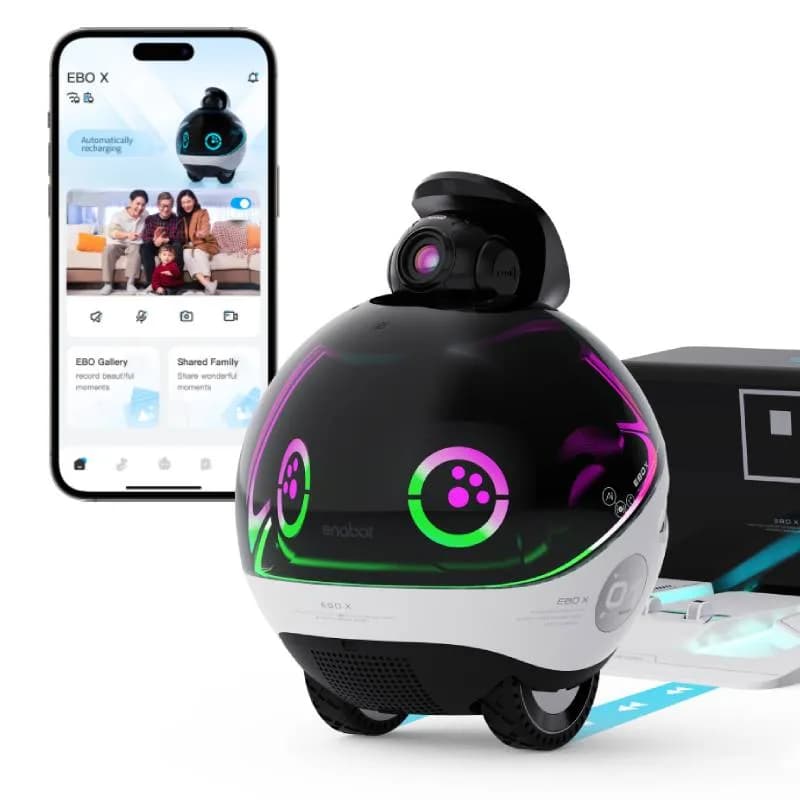
What is Enabot?
- What is Enabot?
- How the FamilyBot robots work
- Enabot and separation anxiety: the warning most listings skip
- Privacy: what an always-on rolling camera actually sees
- Mobility limits: stairs, carpet, and thresholds
- Enabot model comparison
- Best Enabot models for pet owners
- How to choose the right Enabot for your pet
- Cat vs. dog reactions to a rolling robot
- Common mistakes to avoid
- Alternatives worth considering
Enabot makes self-driving, camera-equipped home robots that roll around your house on their own, and the pet-owner pitch is simple: a mobile camera that follows your dog or cat from room to room instead of staring at one fixed corner. Before you buy an EBO X, EBO Max, or a pet-specific ROLA model, here is what actually matters for pet owners — including a warning most sales pages skip.
- What is Enabot?
- How the FamilyBot robots work
- The separation anxiety warning
- Privacy: what an always-on rolling camera sees
- Mobility limits: stairs, carpet, thresholds
- Enabot model comparison
- Best Enabot models for pet owners
- How to choose for your pet
- Cat vs. dog reactions
- Common mistakes to avoid
- Alternatives worth considering
- How we chose
- Enabot's EBO and ROLA robots are monitoring and enrichment gadgets, not a treatment for separation anxiety.
- Two-way audio can backfire on anxious dogs — hearing your voice without finding you can raise stress, not lower it.
- Only the ROLA PetPal has an automated treat dispenser; the EBO line does not.
- These are small-wheeled robots — stairs, deep carpet, and door thresholds are real limits.
- Check cloud vs. local storage and encryption before you buy an always-on rolling camera for your home.
A genuinely useful pet-monitoring gadget — not a fix for anxiety or a substitute for a walker
If you want a camera that follows your pet around instead of sitting in one corner, an Enabot robot is worth a look — as an enrichment and check-in tool, not a behavioral fix.
Shop Enabot StoreWhat is Enabot?
Enabot is a pet-tech and smart-home brand built around a "FamilyBot" ecosystem — self-driving rolling robots with built-in cameras that navigate a home on their own rather than staying fixed in place. The lineup spans a flagship EBO X, mid-range EBO Max and EBO Air 2 Plus, a budget EBO Mini Sport, and a pet-dedicated ROLA line built specifically around monitoring and play for cats and dogs, alongside the EBO Air 2S, the current model in the Air series.
Every model is marketed the same way: point a camera at your pet while you're out, get an alert or a live feed on your phone, and optionally talk to your pet or trigger a laser toy remotely. The appeal for pet owners is obvious — a robot that follows your dog into the next room beats a fixed camera that loses him the moment he walks out of frame.
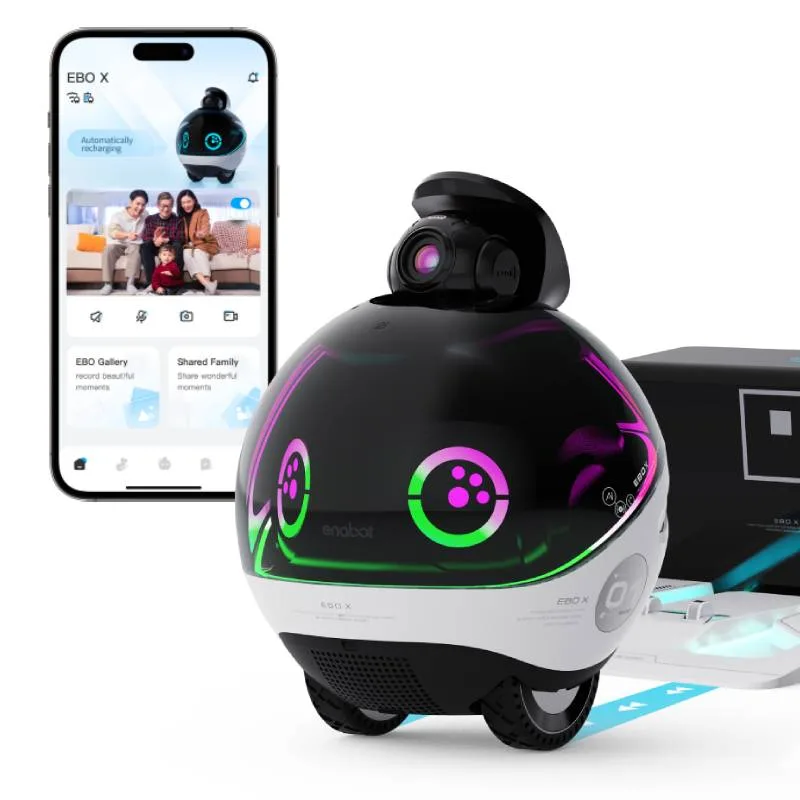
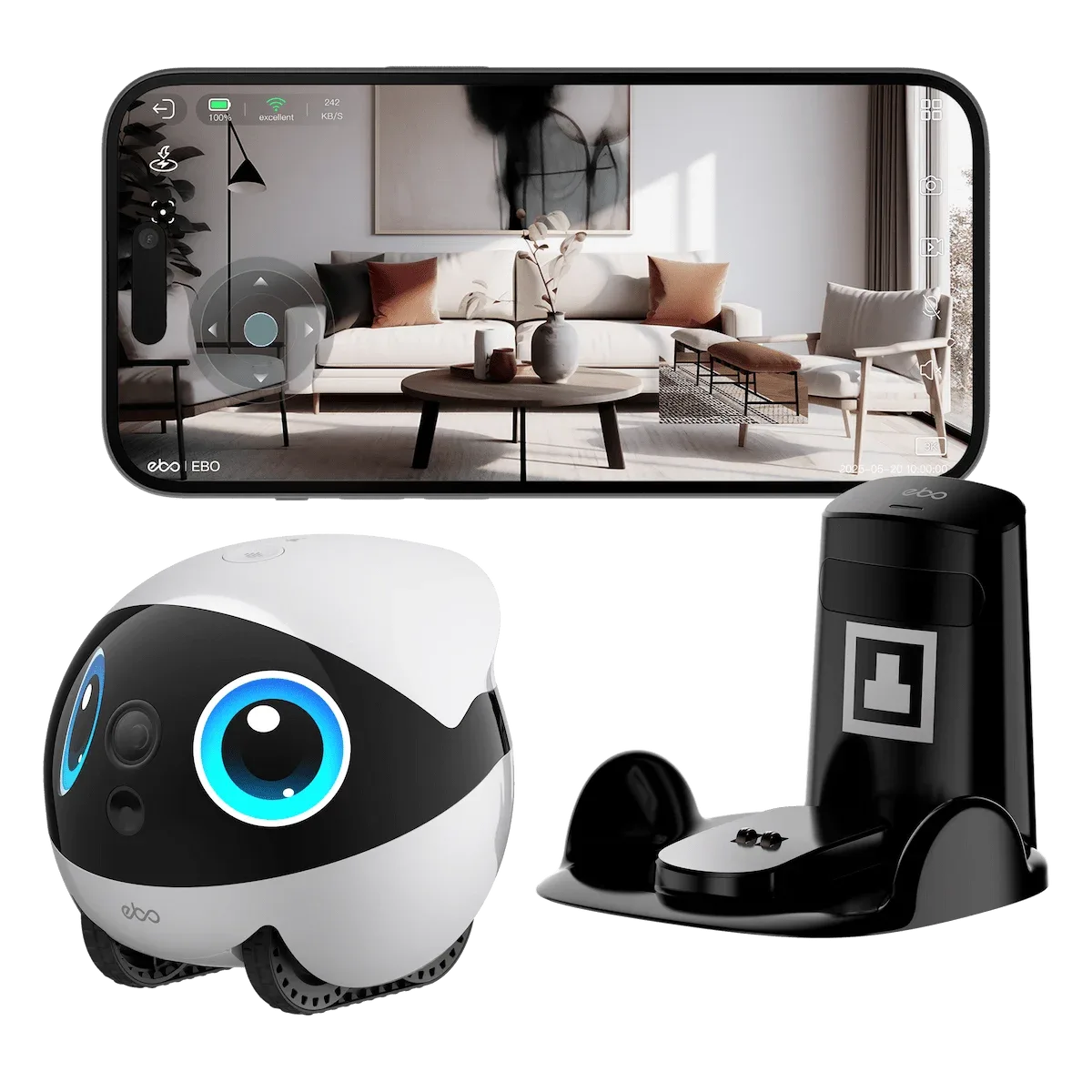
EBO X — Flagship FamilyBot
4K/8MP camera, 106° field of view, and the longest battery runtime in the Enabot lineup, built for owners who want the most capable rolling pet camera.
How the FamilyBot robots work
Every Enabot robot uses V-SLAM (visual simultaneous localization and mapping) to build a live map of your home as it moves, avoid obstacles, and dock itself to recharge automatically. Cameras range from 2K on the entry-level EBO Mini Sport up to 4K/8MP on the EBO X, with wide fields of view intended to keep a moving pet in frame instead of relying on you to walk it manually. On the EBO X specifically, that's a 106° field of view, a 2500mAh battery rated for roughly 2–3 hours of runtime, dual brushless motors for self-balancing, and a GPT-4o mini voice assistant that responds to a wake word.
According to Preventive Vet, the specs that actually matter for behavior monitoring are resolution, a wide field of view (ideally 90 degrees or more, or rotation to compensate), night vision, and continuous rather than motion-triggered recording, since behavioral specialists need to see gradual changes in distress over time, not just isolated clips. Rolling coverage is a real advantage here: independent pet-tech comparisons note that fixed cameras fail to track fast-moving pets in the majority of cases owners report, while rolling robots follow the pet between rooms, and rolling robot adoption in the pet camera category grew 45% year-over-year as of 2025.
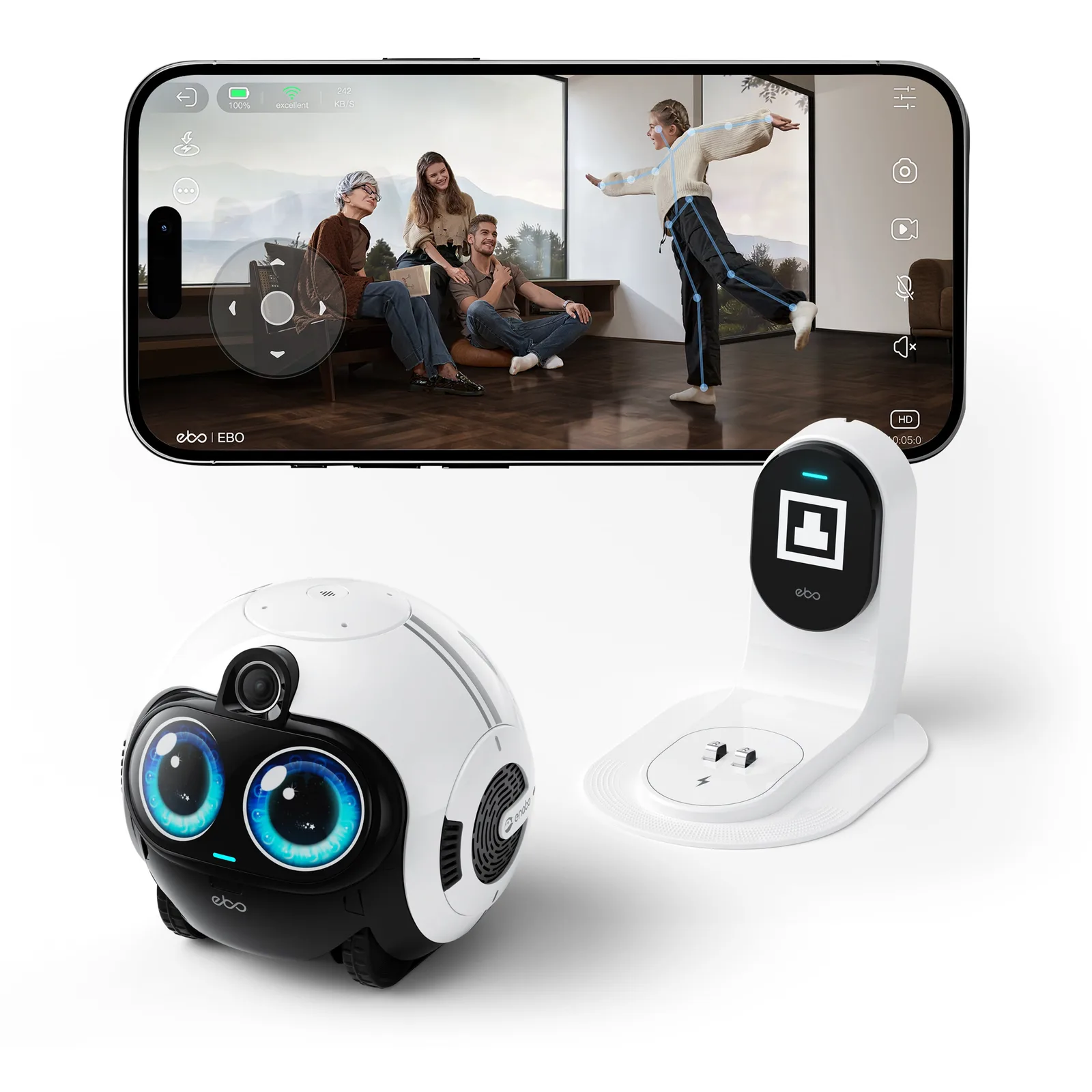
Enabot and separation anxiety: the warning most listings skip
This is the single most important thing to understand before buying an Enabot robot for an anxious dog. The ASPCA defines separation anxiety as a behavioral disorder — not a training failure — marked by indoor accidents, persistent barking or howling, destructive chewing, escape attempts, and pacing, typically starting within minutes of being left alone, and the ASPCA is explicit that it requires professional intervention such as desensitization training and, in moderate-to-severe cases, veterinary-prescribed medication.
Enabot's two-way audio — the ability to talk to your pet through the robot — sounds like the obvious comfort feature. It can backfire. Preventive Vet, a veterinary resource guide, cautions that hearing an absent owner's voice through a camera, without being able to locate or reach them, can increase a dog's distress rather than soothe it, and recommends two-way audio be reserved for general monitoring or play rather than separation-anxiety management specifically. A 2024 longitudinal study (the Generation Pup cohort) found separation-related behavior arises from a combination of a dog's temperament, the owner relationship, and how the two interact — not a single fixable trigger, and that dogs raised alongside another dog as puppies were significantly less likely to show separation-related behavior later on.
The plain-language takeaway: a rolling camera robot is a monitoring and enrichment tool, not a treatment. If your dog has diagnosed or suspected separation anxiety, talk to a veterinarian or certified behaviorist before you lean on remote voice contact as a fix.
Privacy: what an always-on rolling camera actually sees
A robot that drives itself around your home while recording is a different privacy question than a doorbell camera. Independent pet-robot privacy guidance points out that these "roving cameras" collect video, audio through microphone arrays, and spatial mapping data as they build a floor plan of your rooms, and that cloud-based storage carries real risk — footage retained on company servers, potential staff access for "quality assurance," and exposure if a breach occurs. Some robots build detailed 3D floor-plan maps that live on company servers if encryption isn't handled properly. Before you buy, check whether the model stores video locally (SD card) or in the cloud, whether it offers end-to-end encryption, and whether it supports two-factor authentication on the account. Local storage avoids the cloud exposure risk but usually takes more setup effort.
Mobility limits: stairs, carpet, and thresholds
Every Enabot model is a small-wheeled robot, and that has real consequences for where it can actually go. None of the current lineup climbs stairs, so a robot on your ground floor stays on your ground floor while you're out. Deep carpet, rugs, and door thresholds can also stop a robot mid-patrol or make it work harder than a hard floor would. The EBO X is rated for roughly a 15° climbing angle and around 10mm of obstacle height, while the pet-specific ROLA PetPal is built with the same 15° climbing capability but notably improved passability for crossing carpets, rugs, and small thresholds, though it still cannot climb stairs and is a single-level device. If your home has more than one floor, or if the areas your pet spends the most time in are behind a raised threshold or deep pile carpet, expect the robot to occasionally get stuck while you're not there to reposition it.
Enabot model comparison
Here's how the current Enabot and ROLA lineup stacks up on the details that matter most to pet owners.
| Model | Camera | Standout feature | Best for |
|---|---|---|---|
| EBO X | 4K/8MP, 106° FOV | GPT-4o mini AI voice, longest battery (2–3 hrs) | Home automation enthusiasts wanting the most capable model |
| EBO Max | 4K/8MP wide-angle | Facial recognition, up to 20 face profiles | Multi-pet, multi-person households |
| EBO Air 2S | Not separately published | Current-generation Air-series model, newest model in the Air series | Buyers wanting Enabot's newest mid-range option |
| EBO Air 2 Plus | 3K resolution | Smart Patrol scheduled monitoring rounds | Daily monitoring of specific rooms on a schedule |
| EBO Mini Sport | 2K HD | Laser play, feather-toy attachment | Apartments, small homes, casual check-ins |
| ROLA PetPal | Pet-focused, not published separately | Automated treat dispenser, better carpet mobility | Multi-pet homes with rugs and carpet transitions |
Note: EBO Max battery runtime, and field of view for the Air 2 Plus and Mini Sport, are not publicly published by Enabot at the time of writing.
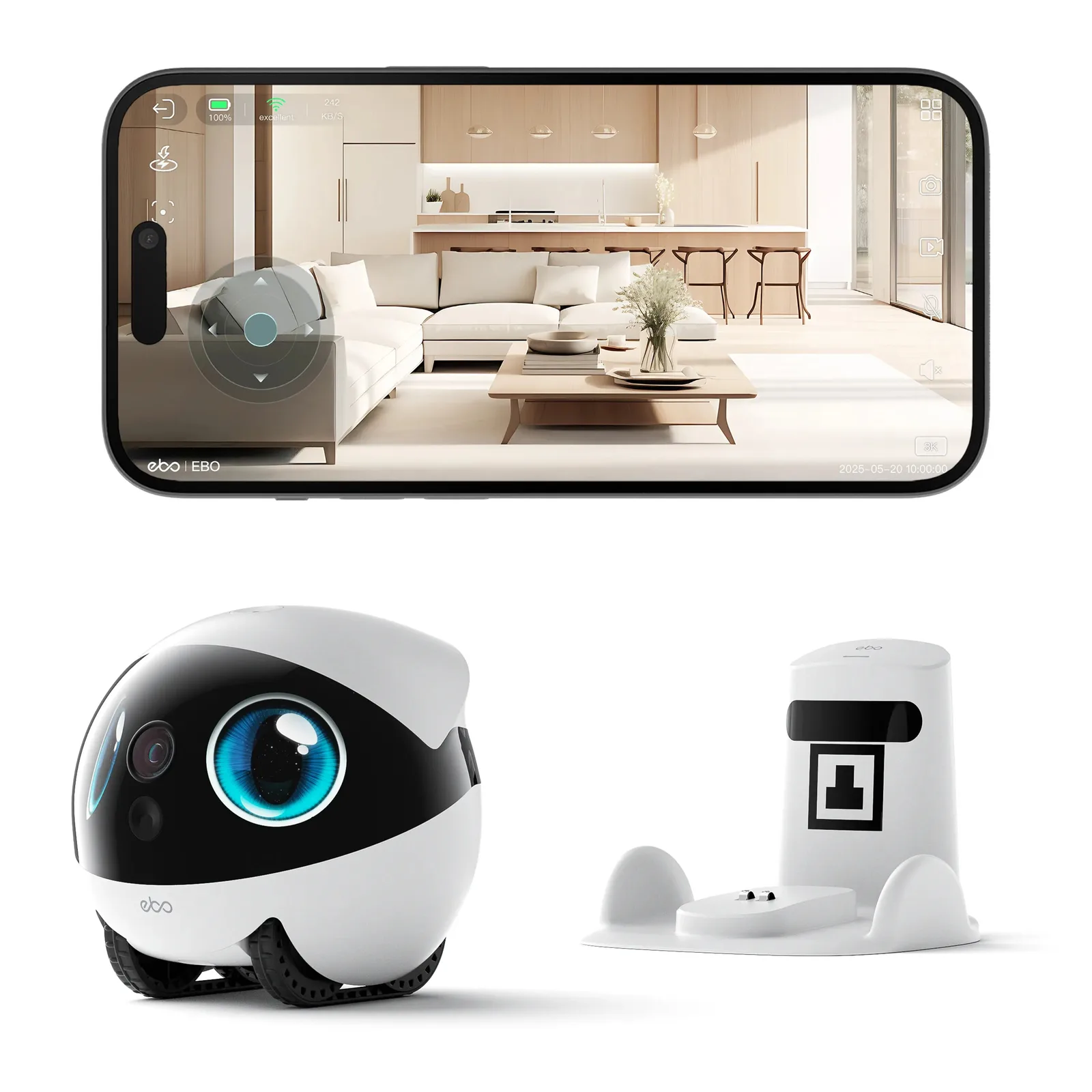
Best Enabot models for pet owners
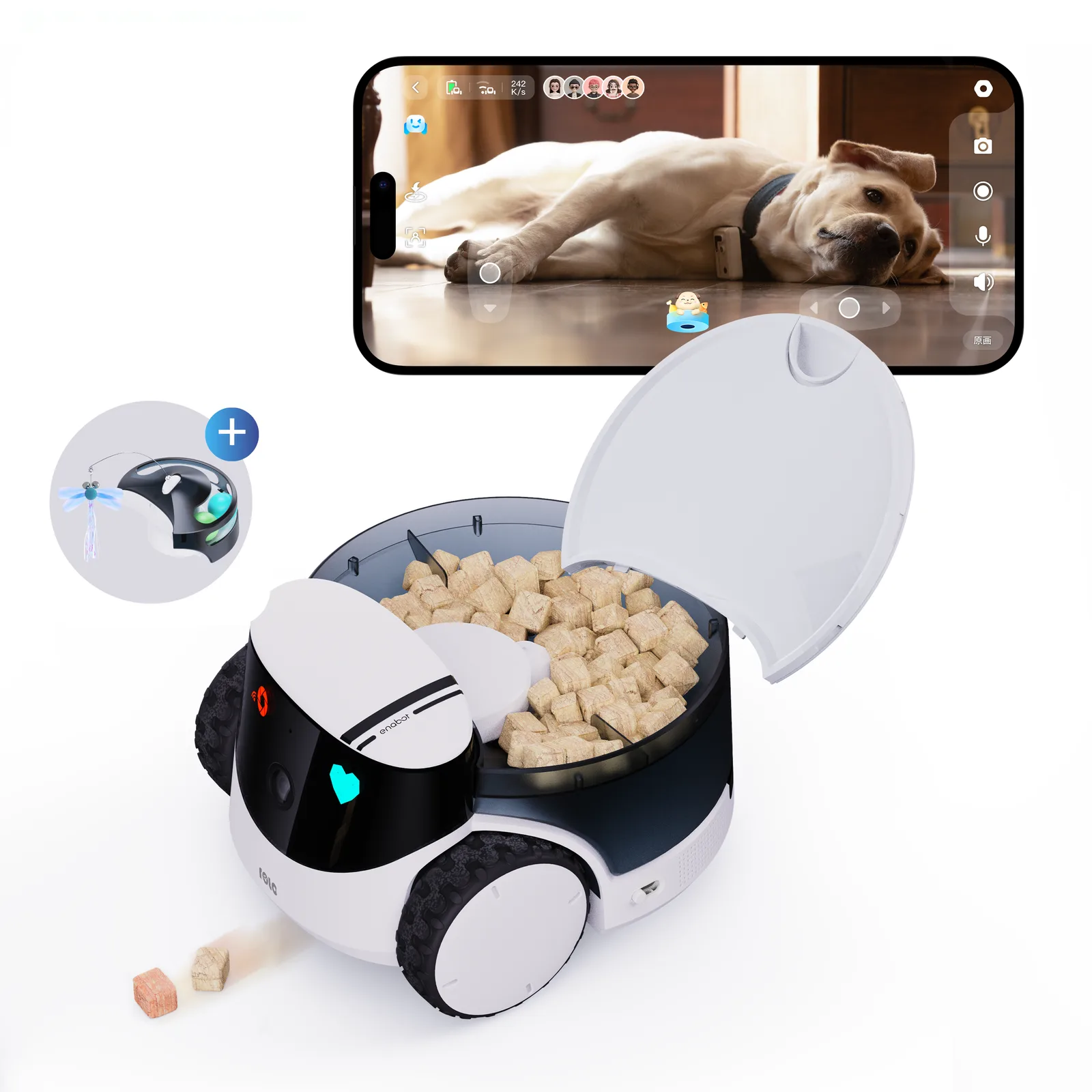
ROLA PetPal
What We Like
- Only model in the lineup with an automated, app-controlled treat dispenser
- Noticeably better at crossing rugs and carpet transitions than the EBO line
What to Consider
- Trades some of EBO X/Max's advanced AI features for pet-specific accessories
- Still can't handle stairs, so it's a single-floor tool
The ROLA PetPal is the Enabot model built specifically around pets rather than home automation, trading some of the EBO line's smart-home AI for a treat dispenser and better traction on rugs and carpet edges. For most pet owners choosing between the two product families, this is the more pet-focused buy.
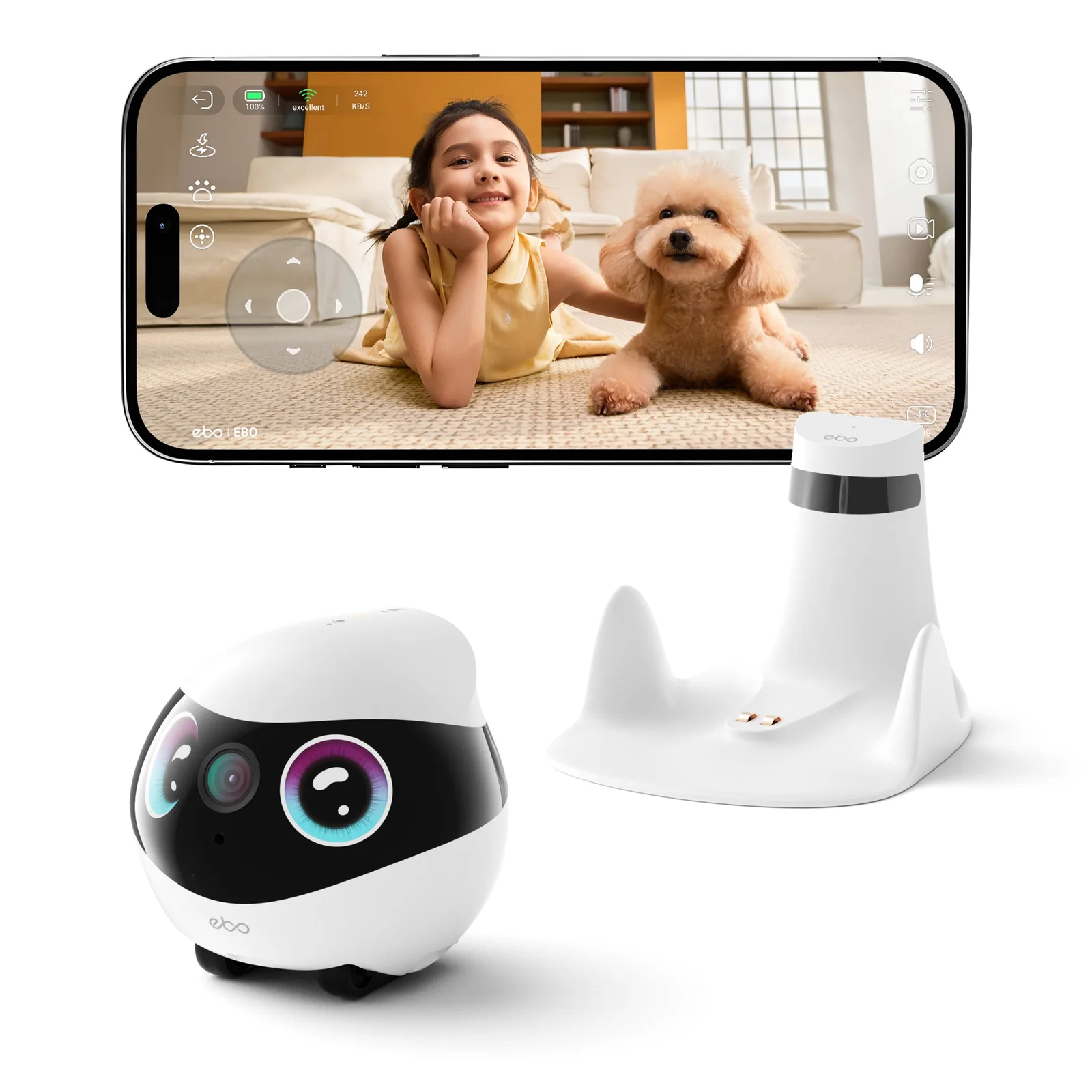
EBO Mini Sport
What We Like
- Quiet brushless motor, light enough for apartments and small homes
- AI recognition helps filter out irrelevant footage automatically
What to Consider
- No treat dispenser
- Battery runtime and field of view are not publicly specified
The EBO Mini Sport is the entry point into the Enabot lineup — enough camera and mobility for casual check-ins on a cat or small dog, without the premium AI features of the EBO X or EBO Max.
How to choose the right Enabot for your pet
Match the model to your actual routine, not the flashiest spec sheet.
- Want the most capable all-around robot? The EBO X's 4K camera, longest battery, and GPT-4o mini voice AI make it the strongest general pick.
- Multiple pets or people in the house? EBO Max's facial recognition (up to 20 profiles) helps the robot and app tell family members and pets apart.
- Want rewards, not just video? ROLA PetPal is the only model with an automated treat dispenser, plus better mobility over rugs.
- Want scheduled room-by-room checks? EBO Air 2 Plus's Smart Patrol feature runs on a set schedule rather than continuous free-roam.
- Small home, tight budget, cats or small dogs? EBO Mini Sport covers casual monitoring without the premium price of the flagship models.
Whichever model you pick, treat it as a monitoring and enrichment layer, not a substitute for a dog walker, a scheduled feeder, daily exercise, or veterinary behavioral care — and note that only the ROLA PetPal actually dispenses food; the EBO line does not.
Cat vs. dog reactions to a rolling robot
Pet responses to a self-driving camera vary a lot by individual temperament and how it's introduced. Most cats and dogs show curiosity the first time they see one, and habituate within roughly 3 to 7 days if the robot is introduced gradually, per independent pet-tech guidance — some pets go on to play with or follow the robot, others simply lose interest once the novelty wears off, and a small percentage of very anxious or reactive pets stay frightened of it and may need a stationary camera instead. Best practice is to leave the robot parked and stationary for a few days before enabling free-roam movement, so the pet can investigate at its own pace. A pet ignoring the robot after the first week doesn't mean it isn't working — for many owners, the bigger value is the peace-of-mind monitoring, not sustained pet engagement. If your cat travels with you and needs its own gear rather than a home robot, our guide to the best cat backpacks for large cats covers carriers built for that instead.
Common mistakes to avoid
- Using two-way audio to "comfort" a dog with diagnosed separation anxiety. It can make distress worse instead of better — work with a vet or behaviorist instead.
- Turning on full free-roam mode on day one. Let an anxious or new pet meet a stationary robot first, then enable movement gradually.
- Skipping the privacy settings. Check cloud vs. local storage and encryption before setup, not after.
- Assuming any Enabot model dispenses treats. Only ROLA PetPal does; the EBO line is camera and play only.
- Expecting whole-house coverage in a multi-level home. None of the current lineup climbs stairs.
Alternatives worth considering
A rolling camera robot isn't the only way to keep a pet engaged while you're out. If separation anxiety or boredom, not surveillance, is the real problem, an interactive toy that doesn't require an always-on camera can be a lower-cost first step — see our review of the PuPPod interactive smart toy. And if the goal is simply a calmer space for your dog to settle into while you're gone, comfort matters as much as monitoring — our guide on how to choose the right size dog bed can help you rule out a poor-fit bed as a hidden stress factor. Fixed stationary cameras remain a simpler, cheaper option if your pet mostly stays in one room and doesn't need to be tracked between spaces.
How We Chose
We compared Enabot's published specifications for every current EBO and ROLA model against independent pet-tech reviews and veterinary behavior sources covering separation anxiety, pet-camera privacy, and rolling vs. fixed camera performance.
The verdict
Enabot's rolling FamilyBot robots are a legitimately useful upgrade over a fixed pet camera for owners who want mobile check-ins and light interactive play — the EBO X is the strongest all-around pick, and the ROLA PetPal is the better choice if a treat dispenser and carpet mobility matter more to you than AI features. What they are not is a treatment for separation anxiety, a substitute for daily exercise, or a stairs-capable whole-home solution — go in with those limits clear and this is a solid buy.
Check Current Price at EnabotSources
- ASPCA — Separation Anxiety in Dogs
- PMC/NCBI — Generation Pup 2024 longitudinal study on separation-related behavior
- Preventive Vet — Best Pet Cameras and Two-Way Audio Guidance
- Pet Robot Camera Privacy Guide
- SiiPet — Rolling vs. Static Pet Cameras
A note on separation anxiety: This article is for general informational purposes and is not veterinary or behavioral advice. If your pet shows signs of separation anxiety or distress, consult a licensed veterinarian or certified animal behaviorist. A monitoring robot is not a substitute for professional evaluation or treatment.
Recommended for you
 LuxeyPets Cat Enclosure XL Review: Best Outdoor Catio 2026
 LuxeyPets Guide 2026: Complete Cat Enclosure & Tower Review
 GeckoCustom Review: Best Personalized Pet Lover Gifts (2026)
 Found My Animal: 7 Best-Selling Rescue Pet Gear Picks (2026)
 The Ultimate Guide to Caring for Leopard Geckos at Home
 How to Create the Perfect Habitat for Your Gecko