How to Choose a Cat Tree: Floor-to-Ceiling vs Freestanding (2026)
Floor-to-ceiling or freestanding? Here's how to choose a cat tree that's the right height, stable enough for multiple cats, and built to last — plus where Griffe d'Amour trees fit in.
Why cat trees matter for your cat's wellbeing
- Why cat trees matter for your cat's wellbeing
- How to choose a cat tree: floor-to-ceiling vs freestanding
- Height and stability: what to check before you buy
- Materials that matter: sisal, plush, and durability
- Choosing a cat tree for multi-cat homes
- Small-space and freestanding options
- Common mistakes to avoid
If you're wondering how to choose a cat tree that your cat will actually use, the decision comes down to four things: height, stability, material, and how many cats will share it. A wobbly, undersized tree gets ignored within a week; a well-chosen one becomes command central for climbing, scratching, napping, and watching the room from above. This guide breaks down floor-to-ceiling versus freestanding designs, the height and anchoring rules that keep a tree safe, and how to shop the Griffe d'Amour cat tree range for your specific home.
- Why cat trees matter for your cat's wellbeing
- How to choose a cat tree: floor-to-ceiling vs freestanding
- Height and stability: what to check before you buy
- Materials that matter: sisal, plush, and durability
- Choosing a cat tree for multi-cat homes
- Small-space and freestanding options
- Common mistakes to avoid
Go floor-to-ceiling for stability and multi-cat homes; go freestanding for renters and small spaces.
Floor-to-ceiling trees anchor between floor and ceiling for maximum stability at height, while freestanding trees rely on a wide base and don't require any wall or ceiling contact — better for renters. Griffe d'Amour carries both styles in sisal-wrapped construction.
Shop Griffe d'Amour Cat TreesKey highlights
- Aim for at least 48–72 inches of height for confident climbing and stretching room.
- Anchor any tree over 60 inches to the wall to prevent tipping.
- Sisal rope or sisal fabric posts hold up better than carpet-wrapped posts under daily scratching.
- In multi-cat homes, plan on one vertical perch or tree level per cat, not one tree total.
- Freestanding trees suit renters; floor-to-ceiling trees suit permanent, multi-cat setups.
Why cat trees matter for your cat's wellbeing
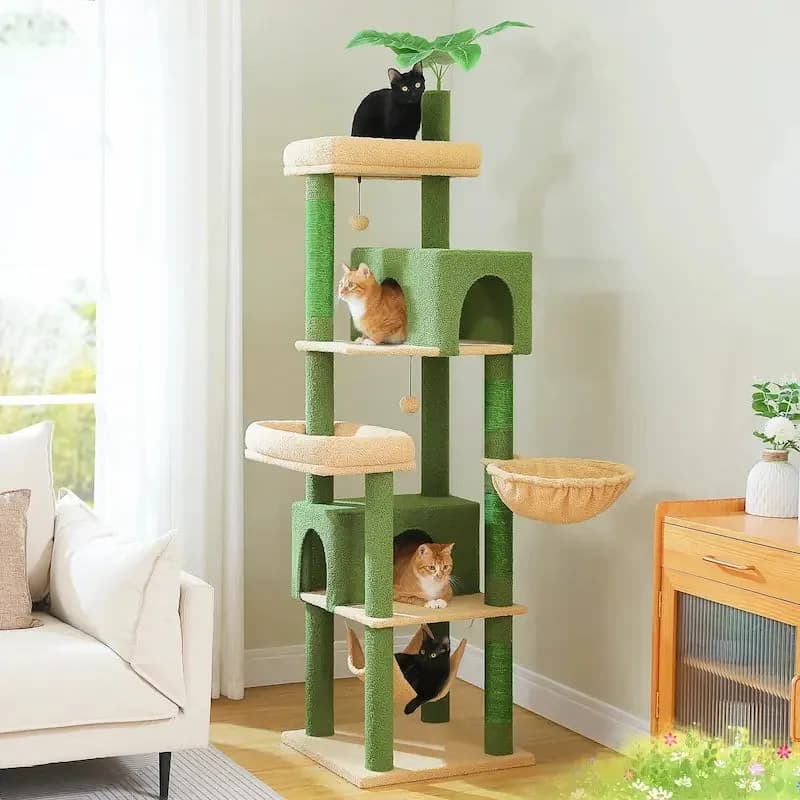
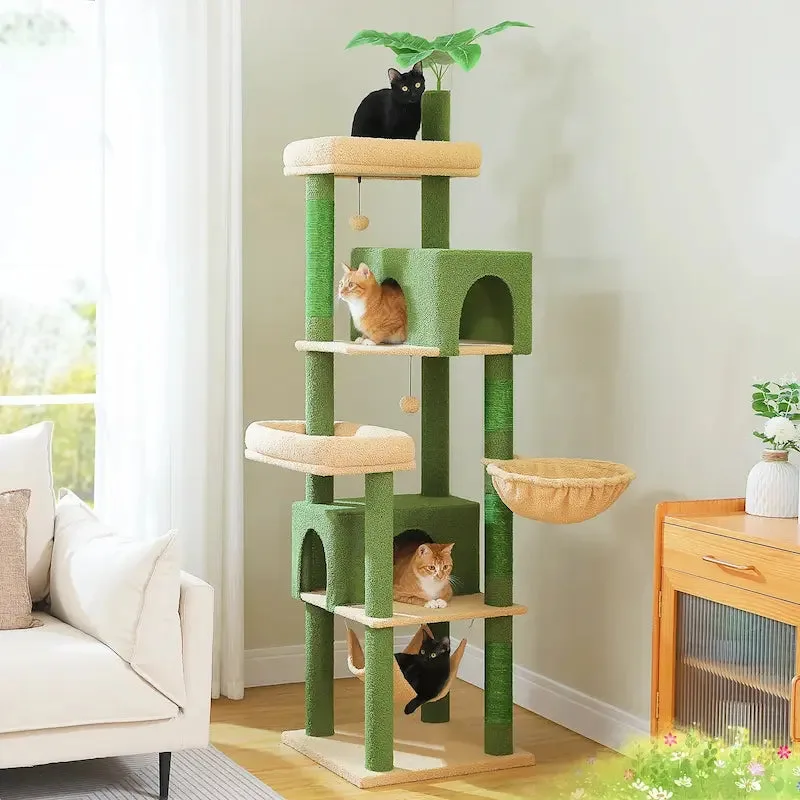
Cats are wired to seek height. In the wild, an elevated perch means a wider field of vision, a safer resting spot, and control over territory — instincts that don't disappear indoors. ASPCA and ISFM environmental guidance identifies vertical space, including cat trees, shelves, and window perches, as particularly beneficial for feline welfare, especially in confined spaces. When cats don't have enough vertical territory, stress-related behaviors like inappropriate scratching and inter-cat conflict can follow.
In homes with more than one cat, a tall tree effectively adds floor space you don't have — each level becomes its own claimable spot, which is exactly why vertical space helps cats claim territory without confrontation, reducing aggressive encounters and territorial stress in multi-cat homes. A cat tree isn't a luxury item; it's functional environmental enrichment.
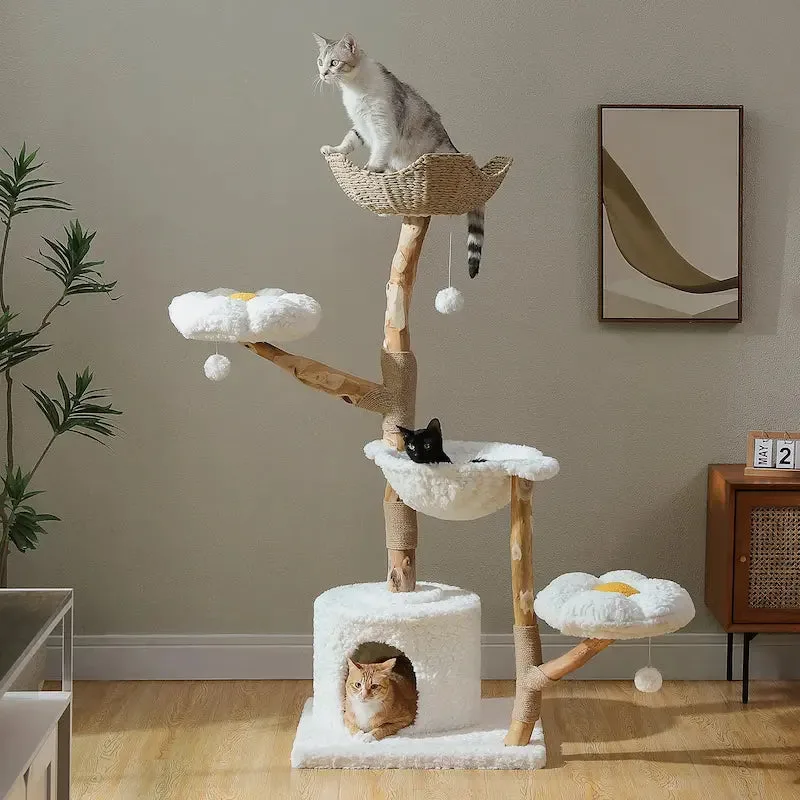
Griffe d'Amour 5-Level Sisal Tower
A mid-height freestanding tower with sisal-wrapped posts, sized for one to two cats in a standard living room.
View product detailsHow to choose a cat tree: floor-to-ceiling vs freestanding
The first real decision when learning how to choose a cat tree is which construction style fits your home: floor-to-ceiling or freestanding. Both give your cat vertical territory, but they solve for different constraints.
Floor-to-ceiling trees use a tension pole or wall bracket to brace the structure between the floor and the ceiling. Because the top is fixed, these trees can go taller without tipping, and they hold steady even when a cat leaps between levels at speed. They're the strongest choice for multi-cat households and for cats that climb hard. The trade-off is that they need an accurate ceiling-height measurement and are less practical for renters who move often.
Freestanding trees rely entirely on a wide, weighted base — no ceiling or wall contact required. That makes them fully portable and rental-friendly, which matters if you move apartments or want to rearrange furniture seasonally. The trade-off is a lower practical height ceiling and a bigger footprint needed for stability at any given height.
As a rule of thumb: choose floor-to-ceiling if you have two or more cats, a fixed living space, and want maximum vertical territory. Choose freestanding if you rent, have limited floor space to dedicate to a wide base, or want to reposition the tree between rooms. Griffe d'Amour carries both styles in sisal-wrapped construction.
Height and stability: what to check before you buy
Height and stability decide whether a cat tree gets used daily or becomes a laundry rack. Cat trees providing real vertical stimulation should be at least 48–72 inches tall with a wide base for stability, so cats of all ages can climb and perch confidently without the structure rocking.
Stability matters as much as height. Tall cat towers over 60 inches benefit from wall anchoring to prevent tipping during jumping or climbing, particularly when multiple cats share the tree or a cat lands hard between levels. Before buying, check three things: base width relative to overall height, whether the manufacturer supplies a wall-anchor strap for taller models, and the weight rating per platform if you have a larger-breed cat.
- Under 48 inches: fine as a scratching post or kitten starter, but limited climbing value for adult cats.
- 48–72 inches: the sweet spot most guidance recommends for adult cats and general households.
- Over 60 inches: wall-anchor it, whether it's marketed as floor-to-ceiling or freestanding.
Materials that matter: sisal, plush, and durability
Scratching surface quality decides whether a cat tree also solves your furniture-scratching problem. Sisal fibers provide the ideal scratching surface because the texture mimics tree bark, which wild cats naturally scratch, and the rough texture helps cats shed the outer sheath of their claws. Cats return to a well-made sisal post voluntarily, which is exactly why Griffe d'Amour wraps its posts in sisal rather than carpet.
Not all sisal is equal. Sisal rope is more durable than sisal fabric due to its coarser texture and stronger fibers, and quality sisal posts last one to three years under normal use. Carpet-wrapped posts look tidy on day one but fray fast and rarely satisfy a cat's scratching instinct the way sisal does. When comparing trees, run a hand over the post: rope-wrapped sisal should feel coarse and taut, not loose or fuzzy.
Choosing a cat tree for multi-cat homes
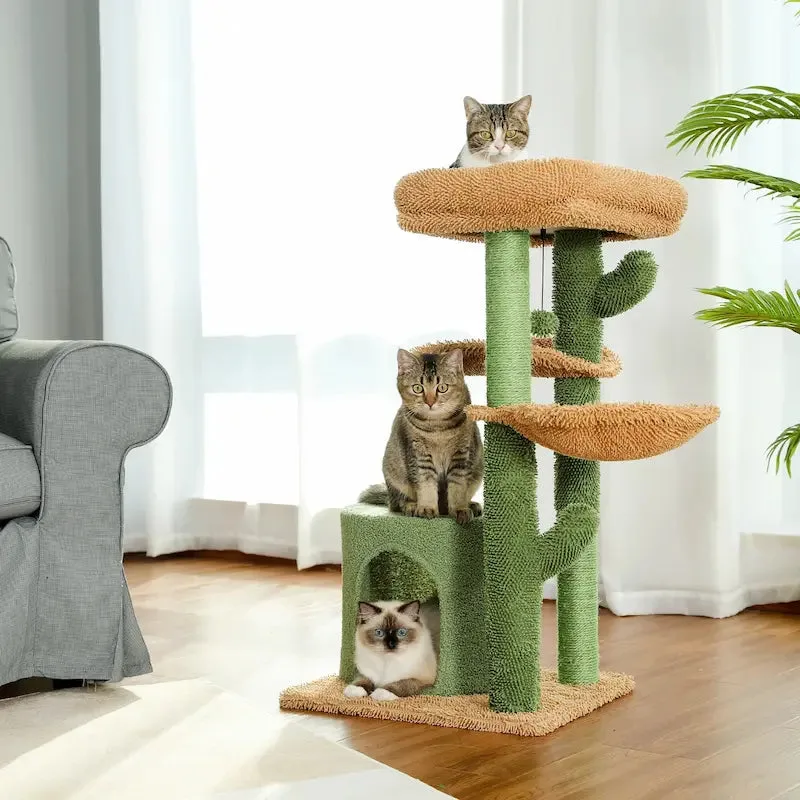
If you have more than one cat, treat the cat tree as a resource, not a decoration. AAFP and ISFM guidelines recommend one resource per cat plus one extra — for scratching posts specifically, that means planning on one tall vertical scratcher per cat in separate territories rather than expecting cats to share a single post. Resource competition over limited perches and scratching spots is a known driver of chronic stress and territorial conflict in multi-cat households.
In practice, this means either buying one large floor-to-ceiling tree with enough distinct platforms for each cat, or placing two smaller freestanding trees in separate rooms so cats aren't forced into the same territory. Resources should be distributed across the home in socially meaningful locations, not clustered in one spare room — the same logic that applies to litter boxes and feeding stations applies to vertical space. If you're also rethinking litter setup for a multi-cat household, our self-cleaning litter box review covers resourcing for multiple cats in more depth.
Small-space and freestanding options
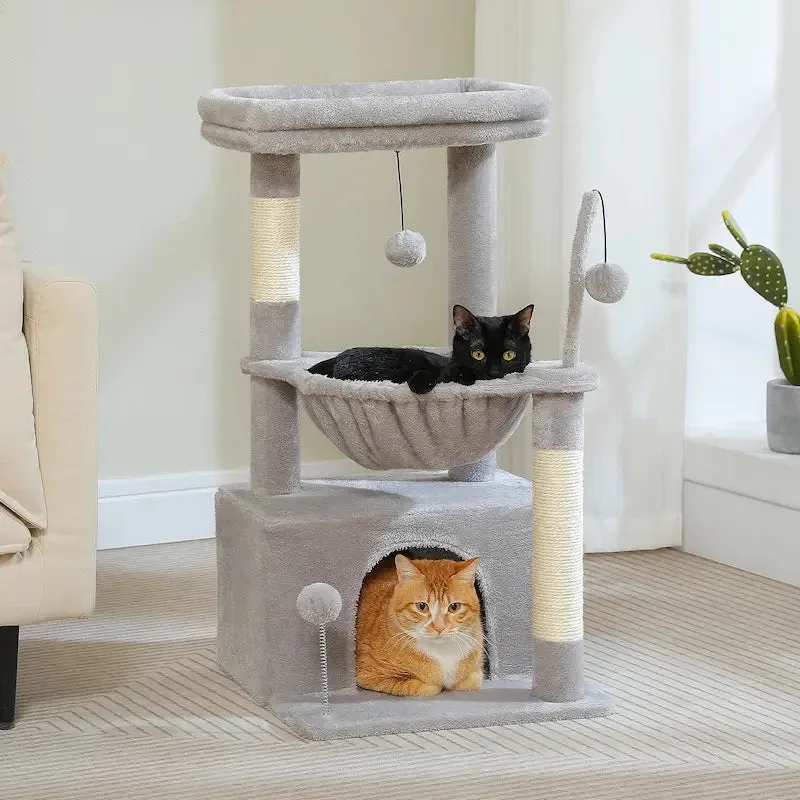
Apartments and small homes don't rule out a proper cat tree — they just narrow the shortlist to freestanding and compact designs. A mini tower with a stable, weighted base can still clear the 48-inch minimum while taking up a fraction of the floor space of a full floor-to-ceiling unit.
| Style | Best for | Footprint | Anchoring needed |
|---|---|---|---|
| Floor-to-ceiling | Multi-cat homes, active climbers | Small base, tall vertical reach | Ceiling tension pole |
| Freestanding tower (48–60") | Single-cat homes, renters | Medium base | Optional wall strap |
| Compact / mini tower | Apartments, small rooms | Small base, lower height | Not required under 48" |
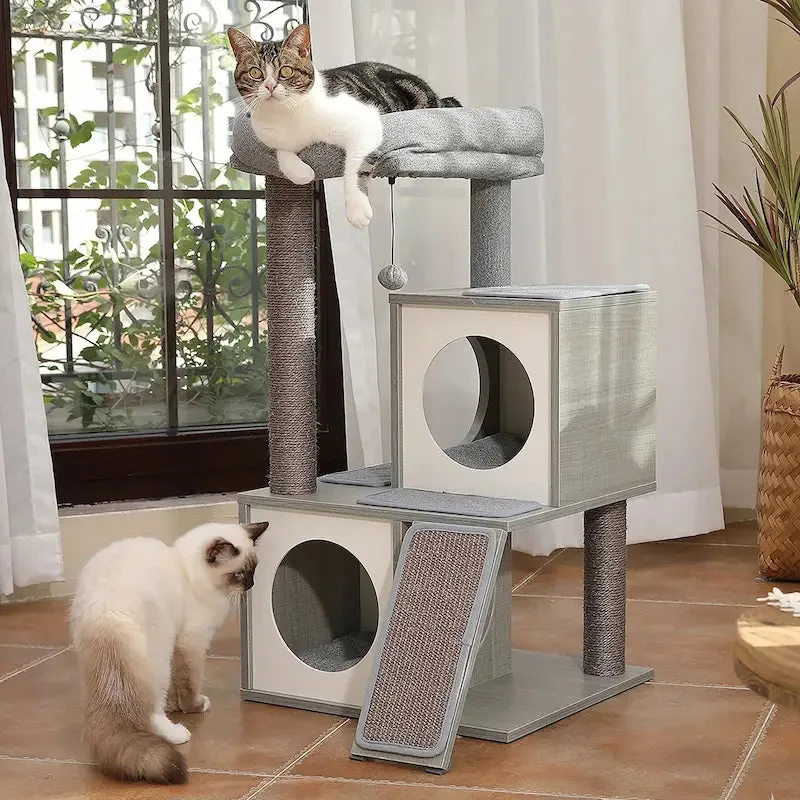
Griffe d'Amour's compact tower keeps the sisal-wrapped scratching posts and at least one elevated platform, so a small-space cat still gets the vertical territory and claw maintenance benefits of a full-size tree — it's simply scaled down.
Common mistakes to avoid
- Buying by looks, not height. A stylish 30-inch tree looks great in photos but won't satisfy an adult cat's need to climb.
- Skipping the wall anchor on tall trees. Any tree over 60 inches should be anchored, even if it's marketed as freestanding-capable.
- Assuming one tree covers three cats. Plan platforms and posts per cat, not per household.
- Choosing carpet over sisal to save money. Carpet wears out fast and doesn't satisfy scratching instinct the way sisal rope does.
- Placing the tree in an isolated room. Cats use trees more when they're positioned in socially active parts of the home, like a living room window.
The bottom line
For most households — especially multi-cat homes — a floor-to-ceiling tree at 48–72 inches with sisal-wrapped posts and a wall anchor is the safest, longest-lasting choice. Renters and small-space owners can get the same core benefits from a stable, compact freestanding tower. Either way, Griffe d'Amour's sisal-wrapped range covers both styles.
Shop Griffe d'Amour Cat TreesReferences
This guide is for general informational purposes and reflects publicly available welfare and product-care guidance current as of the last reviewed date. It is not a substitute for advice from a veterinarian or certified feline behaviorist regarding your specific cat's needs.
Recommended for you
 Griffe d'Amour Review 2026: French Cat Boutique Worth It?
 Cat Harness Training: 4 Safe Steps to Walk Outdoors (2026 Guide)
 CATLINK Self-Cleaning Litter Box Review 2026: 3 Best Models
 How to Clean a Cat Water Fountain: Step-by-Step Guide (KittySpout & More)
 KittySpout Review 2026: Is This Stainless Steel Cat Fountain Worth It?
 Best Cat Water Fountain 2026: Stainless Steel Buyer’s Guide