Cat Harness Training: How to Walk Your Cat Safely Outdoors
A step-by-step guide to cat harness training: how to choose between H-style and vest-style harnesses, the 4-step training timeline, safety rules, and how GPS trackers add peace of mind for outdoor cats.
What Is Cat Harness Training?
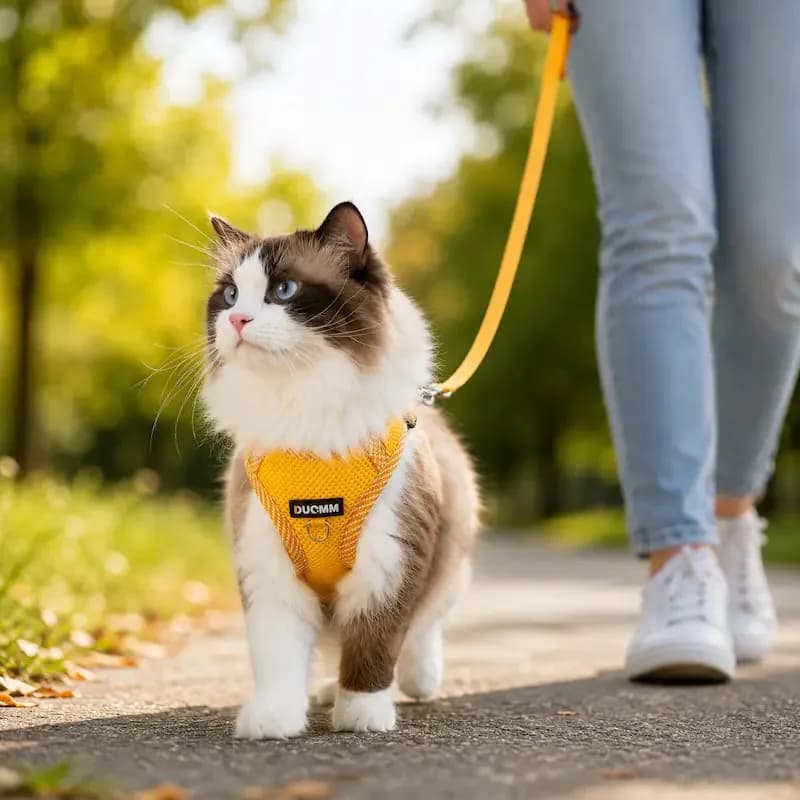
Cat harness training is the process of gradually getting a cat comfortable wearing a harness so it can explore outdoors safely on a leash, instead of roaming free or staying confined indoors. At Pawposia, we break the process into simple, low-stress steps any indoor cat can follow.
Go slow, use positive reinforcement, and pick the right harness style
Cat harness training works best when it is broken into small stages spread over days or weeks, never rushed in one sitting. The right harness style and a calm, reward-based approach make the difference between a cat that tolerates outdoor walks and one that genuinely enjoys them.
What you will learn
- How H-style and vest-style harnesses differ, and which fits your cat's temperament
- A step-by-step, week-by-week cat harness training timeline
- Safety rules that prevent escapes, injuries, and tangled leashes
- How GPS trackers add a safety net once your cat is walking outdoors
What Is Cat Harness Training?
Cat harness training is a gradual desensitization process: you introduce a harness and leash in small, positive steps until your cat associates both with calm, rewarding experiences rather than restriction. Unlike dogs, cats are not naturally leash-trained animals, so the process leans on their curiosity and food motivation rather than obedience commands.
Done correctly, harness training lets an indoor cat safely experience grass, fresh air, and sunlight without the risks of unsupervised roaming — traffic, predators, disease exposure, and getting lost. It is not a one-day fix; most cats need one to three weeks of short, consistent sessions before their first real outdoor walk.
Why Harness Train Your Cat?
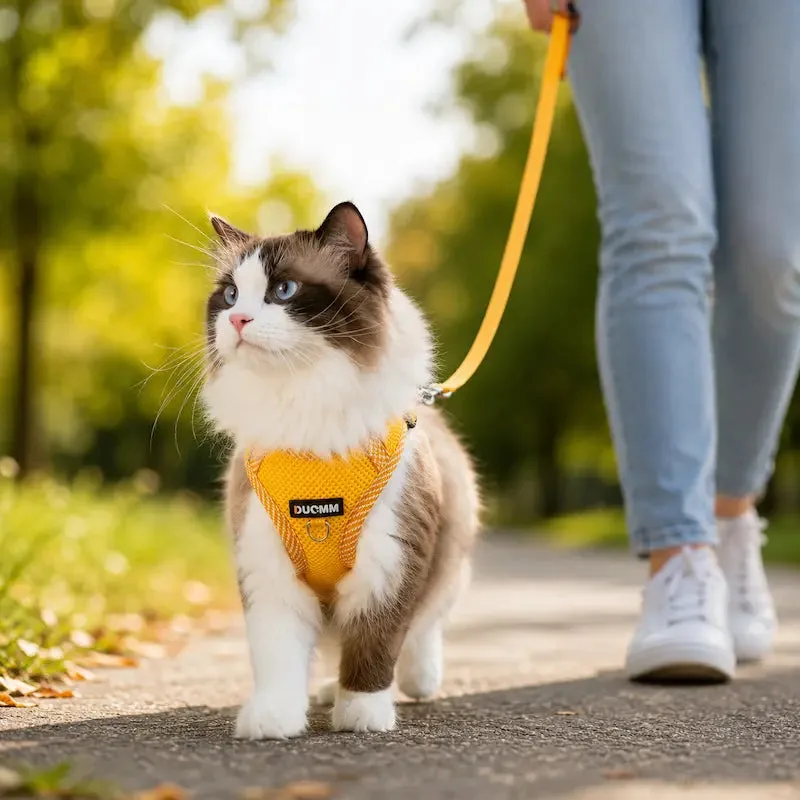
Harness training gives indoor cats safe access to enrichment that pure indoor living cannot fully replicate: novel smells, textures, and sights that reduce boredom and stress. For anxious or reactive cats, structured outdoor time on a harness can also be a form of controlled exposure that builds confidence over time.
It is also a safer middle ground between two extremes many owners face: letting a cat roam free outside (unsupervised, unpredictable) or keeping a curious cat permanently confined indoors. A harness and leash keep the cat physically tethered to you at all times, so you control the environment and can end the walk the moment your cat seems stressed.
H-Style vs. Vest-Style Harnesses: Which Should You Choose?
Before you start cat harness training, the harness style you pick matters as much as the training method. There are two common designs, each with real trade-offs rather than one being universally "better."
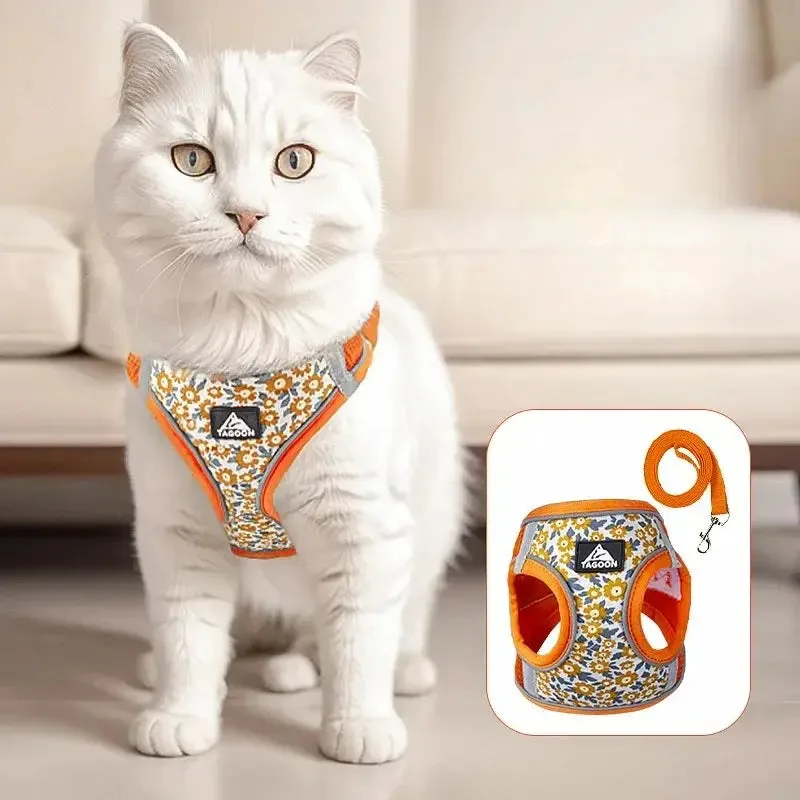
H-style harnesses, shaped like the letter H, have minimal body contact and feel less restrictive, which makes them popular with beginner cats. The drawback: during sudden movements or when a cat pulls forward, an H-style harness can put significant pressure on the neck, similar to a dog straining against a collar. Vest-style harnesses, built more like a jacket, spread the pulling force evenly across the torso and shoulders instead of the neck, which generally makes them the safer choice for cats that pull or for owners who need more control.
| Harness type | Best for | Watch out for |
|---|---|---|
| H-style / Y-style | Beginner cats, minimal body contact | Neck pressure if the cat pulls hard |
| Vest-style | Cats that pull, owners wanting more control | Bulkier, more body contact, slower to get used to |
Whichever style you pick, the leash attachment point should always be on the back, never the neck, and the fit should be snug enough that only two fingers slip comfortably between the harness and your cat's body.
The 4-Step Cat Harness Training Process
This step-by-step cat harness training timeline follows guidance from the San Francisco SPCA's leash-training program, spread across roughly two to three weeks so your cat is never rushed into a stressful experience.
- Days 1–3 — Introduce the harness. Leave the harness near your cat's food bowl or favorite sleeping spot. Offer treats while your cat sniffs and investigates it, so the object itself becomes a positive signal rather than something new and alarming.
- Days 4–7 — Wear it, no leash yet. Put the harness on for a few minutes before mealtime; the upcoming meal distracts from the new sensation of wearing it. Repeat once daily, keeping sessions short and always ending on a calm note.
- Week 2 — Add the leash. Attach the leash and let it drag on the ground indoors while your cat is distracted with treats or play. This lets the cat get used to the weight and feel of the leash without you actively pulling.
- Week 3 and beyond — First walks. Hold the leash gently, with no pulling, while your cat walks around indoors. Once your cat is relaxed with that, carry it outside to a quiet, enclosed area for its first supervised exploration — never let it walk itself out the door.
If your cat freezes, flattens against the ground, or tries to bolt out of the harness at any step, back up to the previous stage and give it more time. Cat harness training is not a race; a cat that takes six weeks instead of three still ends up just as comfortable.
Safety Rules and Common Mistakes to Avoid
A few safety rules apply no matter which harness style or training pace you use. Never tie a cat outside or leave it unattended on a leash — cats can tangle themselves and injure their neck or limbs within seconds. Before any outdoor walk, make sure vaccinations and microchip registration are current, since an escaped or startled cat can slip its leash even in a well-fitted harness.
- Skipping the indoor stages. Owners who put a harness straight onto a cat and head outdoors almost always trigger panic; the indoor steps are what make outdoor walks calm.
- Attaching the leash to the neck. Always clip to the back ring of the harness, never a neck collar, to avoid choking risk if the cat bolts or resists.
- Ignoring body language. A crouched posture, flattened ears, or a puffed tail mean your cat is overwhelmed — end the session, don't push through it.
- Wrong size or loose fit. A harness a cat can back out of is more dangerous than no harness at all; recheck the two-finger fit test after every wash or adjustment.
GPS Trackers: Extra Peace of Mind for Outdoor Cats
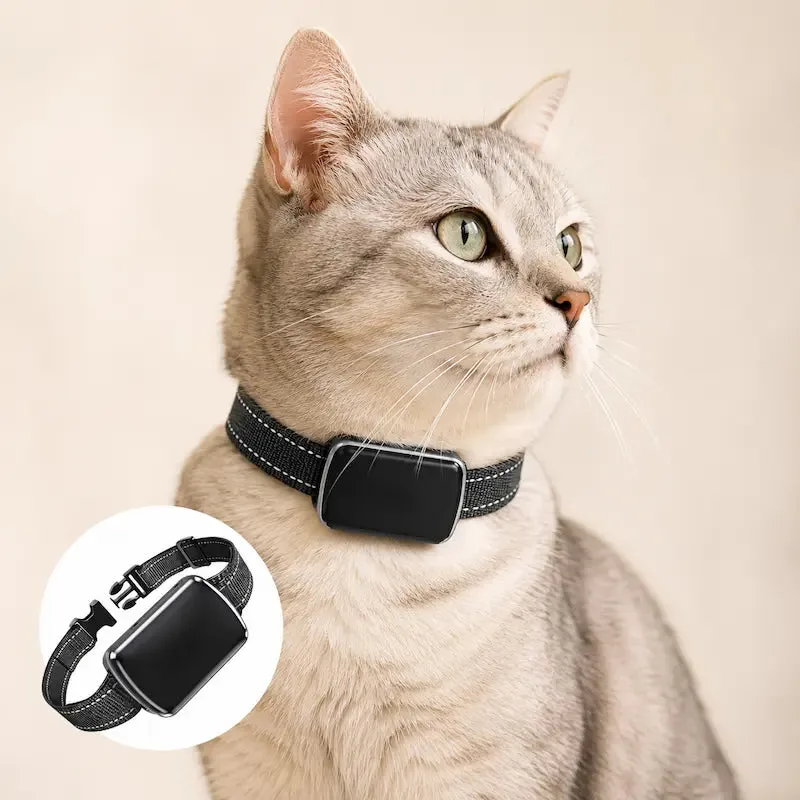
Even a well-trained cat on a harness can slip free during a startle response, which is why many owners pair harness training with a GPS tracker. Modern GPS cat trackers provide real-time location data with roughly 3–5 meter accuracy and typical battery life of 3 to 7 days depending on the model and how often it pings your phone. Most are lightweight, adjustable for different cat sizes, and water-resistant enough to handle rain or splashing during outdoor exploration.
Some harness designs now include a dedicated tracker pocket so the device sits securely without adding weight to the neck area. Microchipping is still worth keeping as a backup identification method — a GPS tracker helps you find a cat quickly, while a microchip helps anyone who finds it identify the owner.
Getting Started: Gear for Your First Outdoor Walks
Once you understand the process, the practical next step is choosing gear that fits your cat's size and temperament. If your cat is more of a carrier-and-explore type than a leash walker, our guide on getting a cat used to a backpack covers a gentler alternative, and our best cat backpack roundup compares options for bigger cats who prefer to observe from a bubble window rather than walk on the ground.
For cats that take well to a harness, Griffe d'Amour makes both Y-style and vest-style cat harnesses along with GPS trackers designed to pair with them, so you can start the training process with gear built for the job.
Griffe d'Amour Harnesses & GPS Trackers
Y-style and vest-style harnesses plus GPS trackers built for outdoor cat exploration, from a brand focused specifically on cat walking gear.
View harnesses & trackersWhere to Go Next
Cat harness training rewards patience: pick a harness style that matches your cat's temperament, work through the four stages over two to three weeks, and never skip the indoor groundwork. Once your cat is comfortable, a GPS tracker adds a practical safety net for those first solo-feeling outdoor adventures. If your cat turns out to be more of a carrier cat than a leash walker, our backpack guides above are the natural next stop.
Sources
This guide is for general educational purposes and is not a substitute for guidance from your veterinarian, especially for cats with anxiety, mobility issues, or existing health conditions. Always supervise outdoor walks and stop immediately if your cat shows signs of distress.
Recommended for you
 Griffe d'Amour Review 2026: French Cat Boutique Worth It?
 How to Choose a Cat Tree: Floor-to-Ceiling vs Freestanding
 CATLINK Self-Cleaning Litter Box Review 2026: 3 Best Models
 How to Clean a Cat Water Fountain: Step-by-Step Guide (KittySpout & More)
 KittySpout Review 2026: Is This Stainless Steel Cat Fountain Worth It?
 Best Cat Water Fountain 2026: Stainless Steel Buyer’s Guide