PawSwing Review: Does This Automatic Cat Groomer Cut Shedding?
PawSwing's mechanical, motor-free grooming house is real and endorsed by a credentialed feline vet professional — but it supplements brushing, not replaces it, and the 80% shedding claim doesn't hold up. Here's the honest breakdown of the Pro, Neo, and Neo Plus.
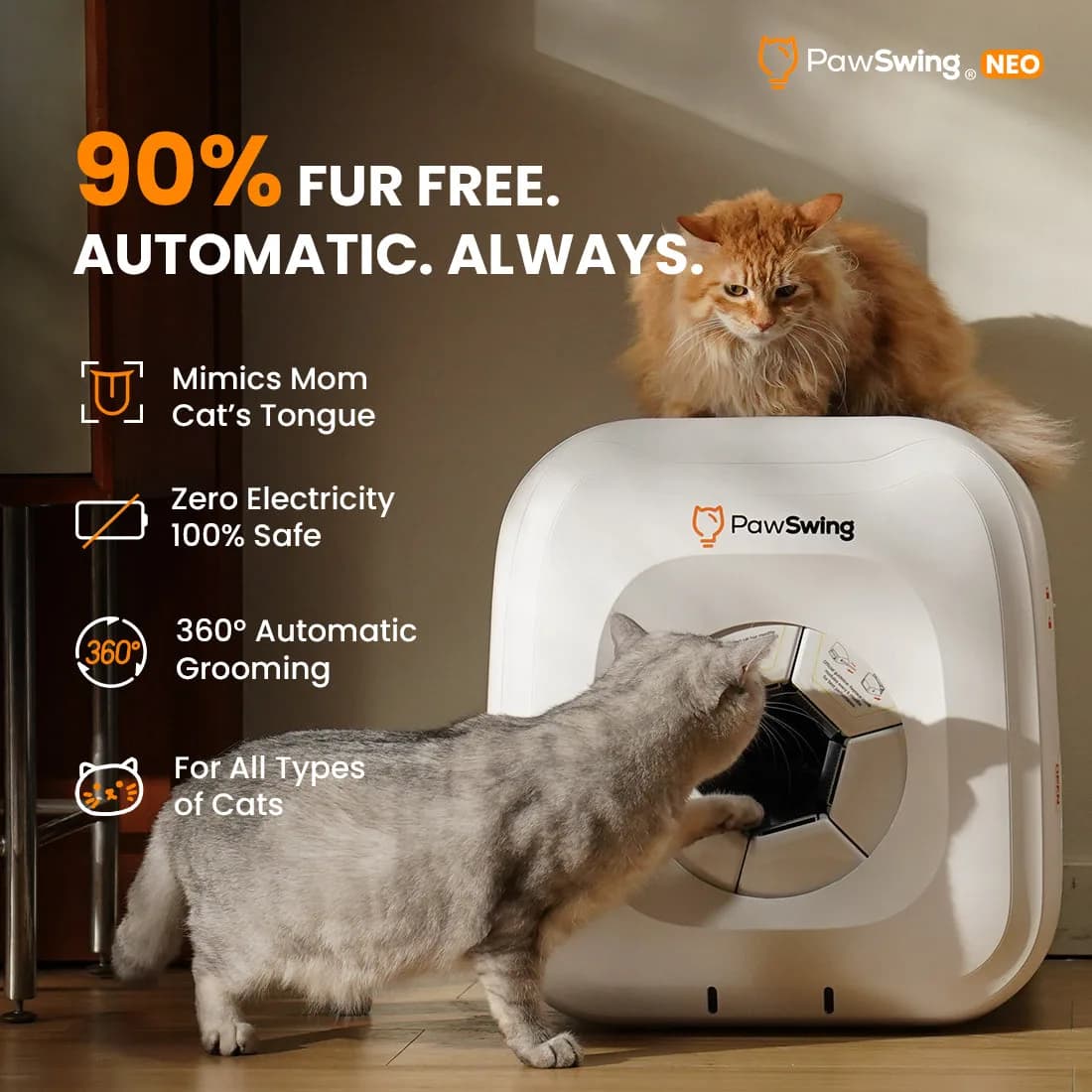
How PawSwing works
PawSwing is a mechanical, motor-free self-grooming cat house that brushes cats as they walk through it, aiming to cut down shedding and loose fur between grooming sessions. It comes in three versions — the standalone PawSwing Pro, the best-selling Neo house, and the large-cat Neo Plus — and this review breaks down what each one actually does, where it falls short, and who should skip it entirely.
Key takeaways
- PawSwing is a passive grooming tool that supplements brushing — it does not replace manual grooming for long-haired or matting-prone cats.
- The device is endorsed by a credentialed feline veterinary professional, but PawSwing markets it as a large reduction in shedding, though the figure is not backed by any published test we could find.
- Cats must choose to use it; some refuse novel objects entirely, per AAFP guidance on feline acclimation.
- Neo Plus is the only version built for large breeds like Maine Coons and Ragdolls, up to 40 lbs.
- In multi-cat homes, one dominant cat can monopolize the unit — plan resources accordingly.
A genuinely useful passive grooming aid — as a supplement, not a substitute, for brushing
PawSwing works best as a daily supplement to brushing, not a replacement — long-haired cats still need hands-on grooming to prevent mats, per ASPCA guidance.
Check current priceHow PawSwing works
The PawSwing Neo is a self-grooming cat house built around a mechanical, motor-free design: six brushes arranged in a 360° circular pattern mimic the texture of a cat's tongue, and the whole thing activates purely from the cat walking in and out over a food-grade silicone plate — no battery, no electronics. No motor, battery, or electronic components are needed to run it. As the cat passes through, the flexible brush surfaces gently comb loose fur off the coat and collect it inside the housing.
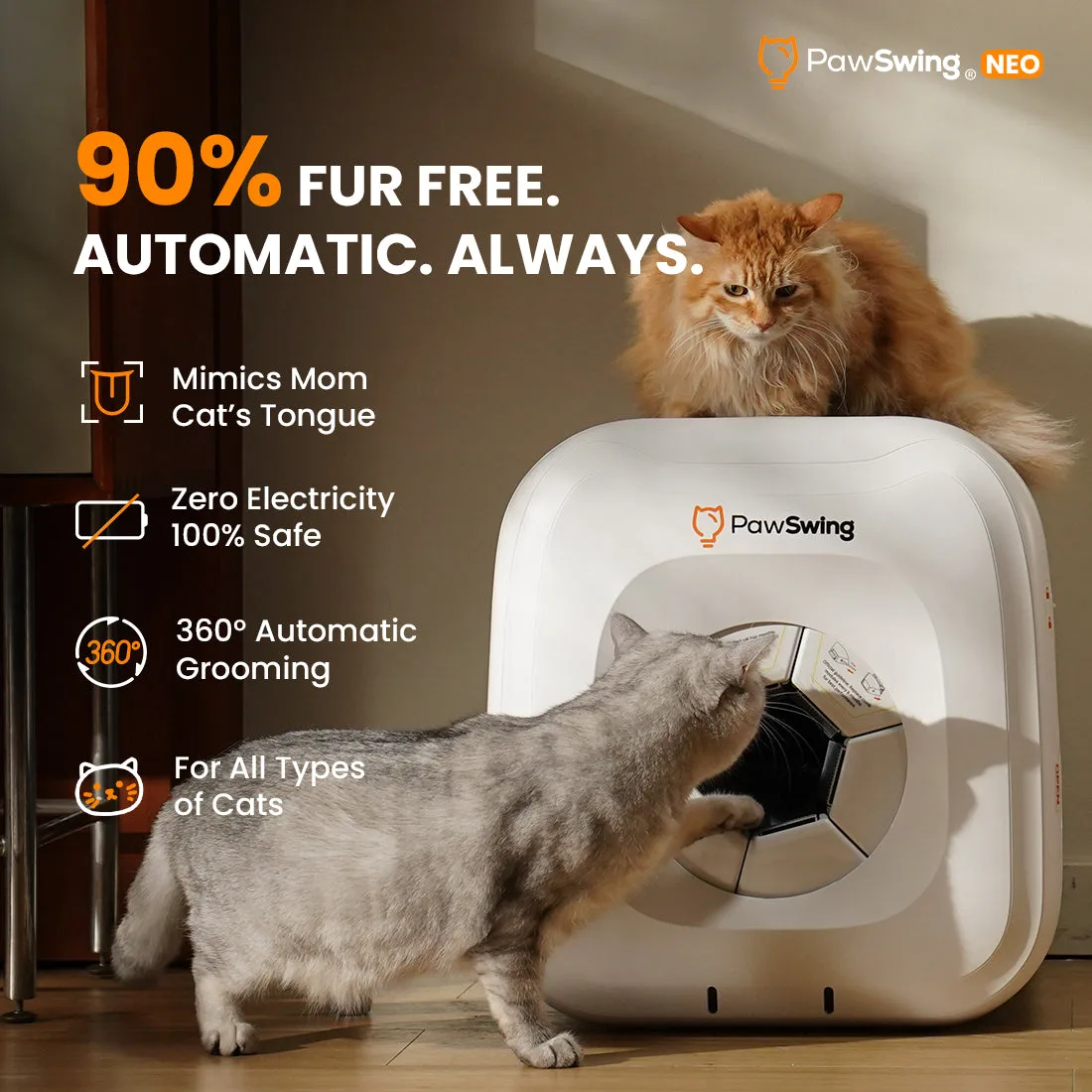
Because it relies on the cat's own movement rather than a motor or timer, PawSwing sidesteps the noise and startle factor that can make cats avoid electric grooming tools. That also means it only grooms the parts of the coat that brush against the openings as the cat walks through — it is not a full-body, all-angle brushing session the way a person with a comb can deliver.
Does PawSwing actually cut shedding?
The honest answer: partially, and the marketing overstates it. PawSwing markets it as a large reduction in shedding, though the figure is not backed by any published test we could find — treat it as a marketing claim, not a clinical result. What is verifiable is the underlying mechanism: regular brushing removes loose fur before a cat swallows it during self-grooming, which is exactly the prevention strategy the Cornell Feline Health Center recommends. Cornell recommends establishing a daily brushing and combing routine as the primary prevention strategy for hairballs, since loose fur removed during grooming will not be ingested by the cat.
A credentialed feline veterinary professional endorsed the Neo, stating it is "designed to stop the shedding cycle at the source" and provides "a safe, warm space for rest." The endorsement comes from a Licensed Veterinary Technician holding the VTS (CP-Feline) credential; the individual's name and practice are not publicly disclosed, so full independent verification isn't possible, though the credentials themselves are legitimate certifications. Independently, Floppycats' review quoted a professional pet groomer with 15 years of experience calling PawSwing "a smart, low-stress solution that simplifies grooming and reduces shedding" — a supportive but non-quantified assessment.
Shedding itself is seasonal, not constant. Cats shed more heavily during spring and fall molts, and indoor cats in heated, artificially-lit homes can shed year-round at a lower baseline level. Expect PawSwing to noticeably reduce loose fur around the house between grooming sessions, especially in shedding season — but not to eliminate shedding outright.
Pro vs Neo vs Neo Plus: which PawSwing model fits your cat
PawSwing sells three distinct products, and picking the wrong one is the most common buyer mistake. The Neo is the mechanical self-grooming house and best-seller; the Pro is a smaller standalone/handheld groomer with an adjustable comb and a USB-rechargeable treat dispenser; the Neo Plus is the Neo's dimensions scaled up for large-breed cats.

| Model | Design | Best for | Key specs |
|---|---|---|---|
| PawSwing Pro | Standalone/handheld groomer | Owners who want a hands-on, portable tool | Adjustable comb, USB-rechargeable treat dispenser, roughly 31.8"L × 16.3"W × 20.5"H |
| PawSwing Neo | Mechanical self-grooming house | Cats of any typical size that self-groom heavily | No motor or battery, 360° brushes, silicone activation plate |
| PawSwing Neo Plus | Enlarged self-grooming house | Large breeds — Maine Coons, Ragdolls, up to 40 lbs | 27.0"L × 18.5"W × 15.5"H, same brush mechanism as Neo |
If your cat is a standard-size shorthair or medium-hair breed, the Neo is the logical starting point — it's the model with the independent Floppycats review and the credentialed vet quote behind it. If you have a Maine Coon, Ragdoll, or another large, heavy-coated breed, size up to the Neo Plus, which is built to 27.0"L × 18.5"W × 15.5"H and rated for cats up to 40 lbs — a standard Neo may simply be too tight. The Pro suits owners who want more manual control over the brushing motion rather than a walk-through design.
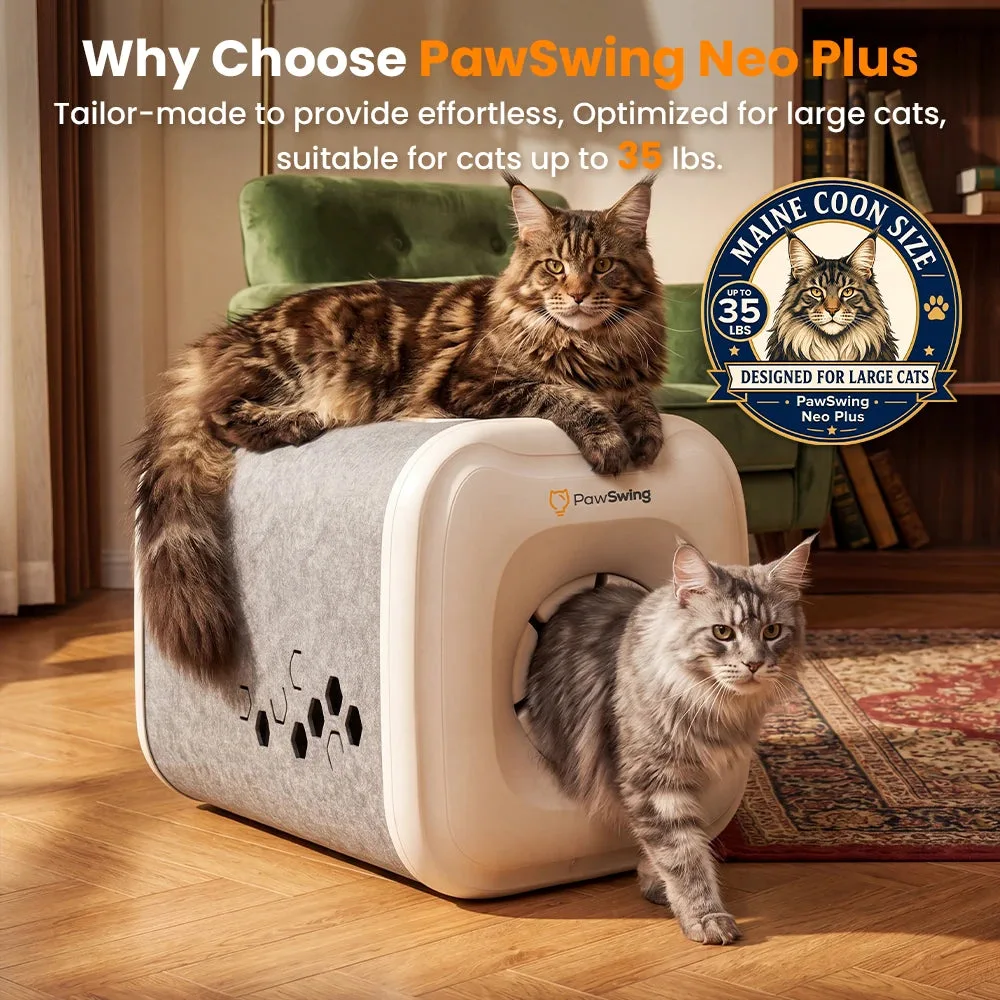
PawSwing Neo Plus
Sized specifically for Maine Coons, Ragdolls, and other large-breed cats up to 40 lbs, with the same motor-free brush design as the standard Neo.
Check current priceWho PawSwing is for — and who should skip it
PawSwing earns its keep for cats that self-groom frequently, shed heavily, and are otherwise healthy — it gives them somewhere to deposit loose fur before it ends up on the couch or swallowed as a hairball. It's also a reasonable pick for busy households that can't commit to a daily brushing routine, since it works passively any time the cat chooses to use it.
It's not the right buy for every cat, though. Long-haired, matting-prone breeds still need manual grooming. Per the ASPCA, long-haired cats need grooming every few days — ideally daily brushing — to remove dead hair and prevent tangles and mats, using tools like metal combs and mat-splitters for stubborn knots. A passive walk-through groomer cannot detangle an existing mat the way a fine-toothed comb can. If your cat already has mats forming, PawSwing supplements the fix but doesn't replace it. Skip it, too, if your cat is skittish around new furniture or objects in general — see the acclimation section below — or if you're hoping for a guaranteed, quantifiable shedding reduction; that number simply isn't verified.
Getting a cat to actually use it
The single biggest risk with a purchase like this is that your cat refuses to use it. Cats are not obligated to walk through a new object just because it's there, and how easily they adapt depends heavily on early-life exposure to novelty.
Per the American Association of Feline Practitioners (AAFP) Feline Environmental Needs Guidelines, early positive exposure to unfamiliar objects supports behavioral flexibility later in life, but adult cats that missed that exposure as kittens can still be acclimated — it just takes patience. Cats that have not been exposed to new stimuli during kittenhood may show fear or avoidance of novel devices, requiring a slower acclimation process with treats and positive reinforcement. In practice, that means placing the unit in a familiar, low-traffic spot, letting the cat investigate on its own schedule, and using treats near (not inside) the entrance before expecting a walk-through. Don't force it — a cat pushed through a novel object it's afraid of is more likely to avoid the whole area going forward.
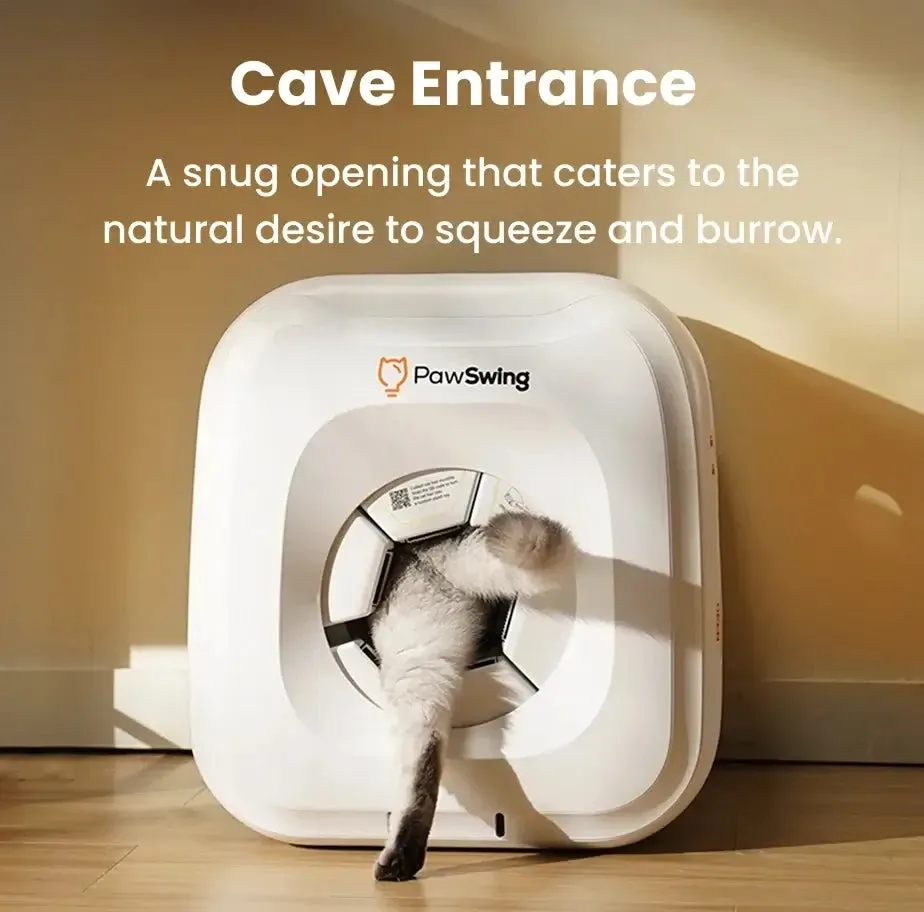
Multi-cat households: the resource-sharing catch
PawSwing is sometimes marketed as working for up to four cats, but that assumes every cat in the home will actually use it — and multi-cat dynamics don't always cooperate. Per International Cat Care, shared resources in multi-cat homes can cause real stress, particularly between cats that aren't part of the same social group. A single grooming device in a multi-cat home may be used preferentially by dominant cats, potentially leaving subordinate cats without access during peak times. If you have more than one cat and a shyer or lower-ranking cat in the mix, watch usage patterns for the first few weeks, and be prepared to place the unit somewhere the more timid cat already feels safe rather than in a shared high-traffic zone.
Maintenance and upkeep
Collected fur needs to be emptied from the housing regularly — how often depends on how much your cat sheds and how frequently it uses the unit, so check it every few days during peak shedding season and less often the rest of the year. The brush surfaces should be wiped down or vacuumed to keep the bristles from matting with trapped hair, and replacement combs are sold for when the original wears down. None of this replaces an occasional full brush-out by hand, especially around the collar, belly, and hindquarters, areas a walk-through design covers less consistently than a comb does.
What to check before you buy
Match the model to your cat's size and coat
Standard Neo for typical-size cats, Neo Plus for large breeds up to 40 lbs, Pro if you want a hands-on standalone tool rather than a walk-through house. Measure your cat's typical resting posture against the unit's interior dimensions if you have a larger-than-average shorthair.
Set realistic shedding expectations
Treat any specific percentage claim with skepticism, and instead expect a visible reduction in loose fur around the home, more noticeable during spring and fall shedding season than in the off-season.
Plan for hairballs realistically
PawSwing can reduce the raw amount of loose fur available for a cat to swallow, which lowers hairball risk — but it does not prevent or cure hairballs. Per Cornell Feline Health Center, a cat coughing up a hairball once every 1–2 weeks is normal and typically requires no concern. Long-haired breeds like Persians and Maine Coons carry a higher hairball risk regardless of grooming tools used. Frequent or repeated retching, or a cat that stops eating, is a reason to call a vet — not a sign your grooming setup has failed.
How We Chose
This review is based on PawSwing's official product specifications, an independent Floppycats review including input from a 15-year professional groomer, and cross-checks against Cornell Feline Health Center, ASPCA, AAFP, and International Cat Care guidance on grooming, hairballs, and multi-cat behavior.
Verdict: worth it as a supplement, not a substitute
PawSwing does what a passive, motor-free grooming tool can reasonably do — it reduces loose fur between brushings and gives self-grooming cats a low-stress option to use on their own schedule. It is not a replacement for regular hands-on brushing, especially for long-haired or matting-prone cats, and PawSwing's marketed shedding-reduction figure should not factor into your decision. Buy the Neo for a typical-size cat, size up to the Neo Plus for a Maine Coon or Ragdoll, and go in expecting your cat to need time — maybe weeks — to accept it.
Check current price on PawSwing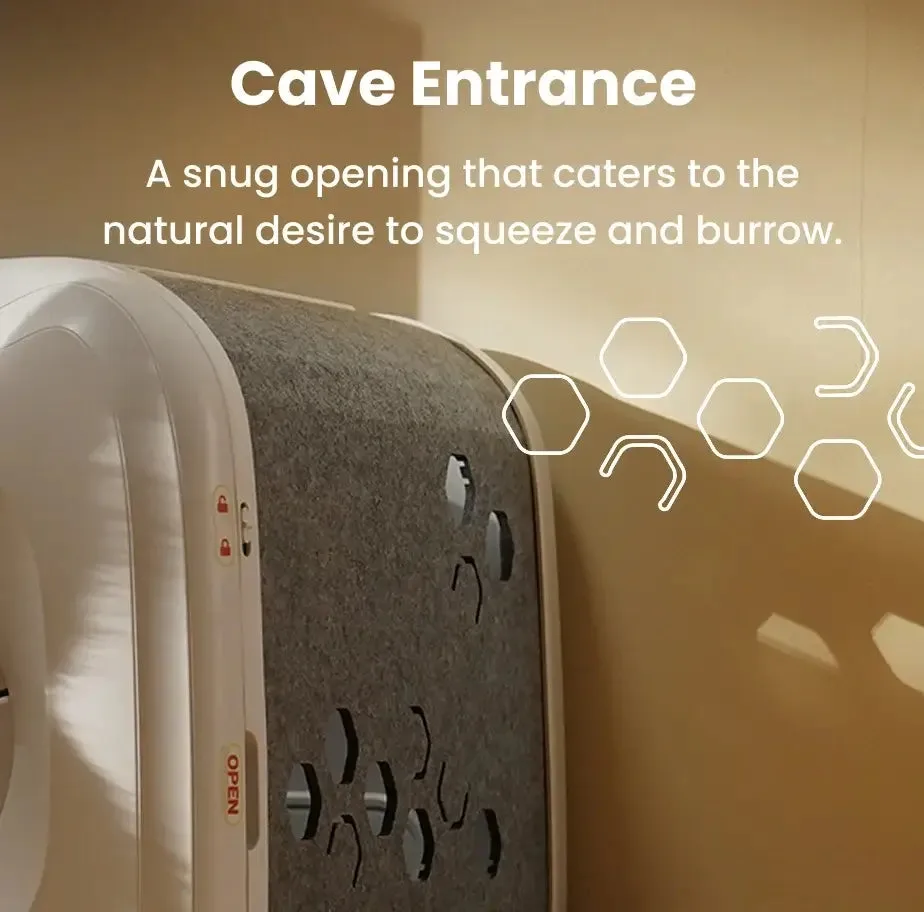
For related cat-care setup, see our guides on choosing a cat tree for vertical territory in multi-cat homes, and self-cleaning litter boxes if hands-off maintenance is a priority across your whole setup.
References
This article is for general informational purposes and is not veterinary advice. If your cat shows repeated retching, stops eating, or has trouble grooming due to matting or a medical condition, consult a licensed veterinarian. Pawposia may earn a commission from purchases made through affiliate links on this page.
Recommended for you
 Griffe d'Amour Review 2026: French Cat Boutique Worth It?
 How to Choose a Cat Tree: Floor-to-Ceiling vs Freestanding
 Cat Harness Training: 4 Safe Steps to Walk Outdoors (2026 Guide)
 CATLINK Self-Cleaning Litter Box Review 2026: 3 Best Models
 How to Clean a Cat Water Fountain: Step-by-Step Guide (KittySpout & More)
 KittySpout Review 2026: Is This Stainless Steel Cat Fountain Worth It?